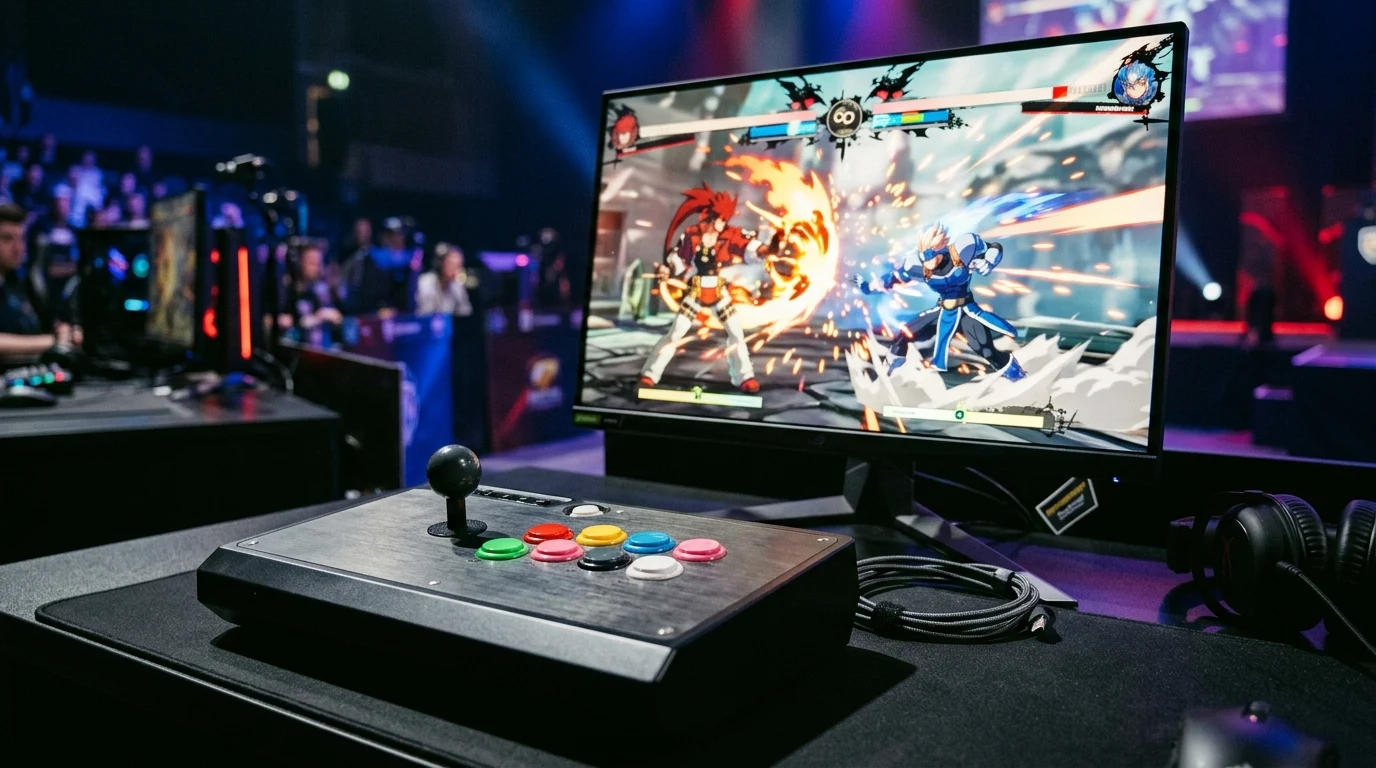
Brawlhalla's rollback netcode is built to hide network latency by predicting opponent movement and correcting when real data arrives — which works well most of the time, but becomes visibly jarring ('teleporting') when the correction has to travel further than expected. For players on AT&T Fiber, the question is whether DNS routing plays a role in how often that correction has to happen.
How Rollback Netcode Interacts with DNS & Packet Jitter
Brawlhalla utilizes deterministic rollback netcode: rather than waiting for opponent input packets to arrive before rendering the next frame (which would introduce sluggish input delay), the game client predicts opponent movement locally.
If your DNS resolver assigns your client to a sub-optimal regional server, or if ISP routing introduces packet arrival jitter, the predicted game state diverges from the server state. When opponent inputs finally arrive, the game engine violently rolls back several frames to reconcile reality, causing players to teleport across the stage.
Sub-Frame Input Consistency in 60 FPS Platform Fighters
In competitive fighting games like Brawlhalla, Super Smash Bros, and Street Fighter 6, the game engine processes inputs on 60 Hz frame boundaries (16.6 ms per frame). A combo window for a gravity-cancel signature move is often as tight as 2 to 3 frames (33 to 50 milliseconds).
If your ISP introduces 15ms of DNS and routing jitter, your opponent's dodge input may arrive 1 frame later than expected, causing the local rollback engine to visually snap the opponent back into position after you already started your punish animation. Hardwiring via Cat6 and configuring Cloudflare DNS (1.1.1.1) on AT&T Fiber provides flat, jitter-free input delivery.
Brawlhalla Command-Line Launch Parameters
To reduce internal game engine input lag and bypass Windows desktop compositor buffering in Brawlhalla:
- In Steam, right-click Brawlhalla → Properties → General → Launch Options.
- Enter the following launch parameters:
-framecore -unlockfps -high. - In your graphics driver control panel (NVIDIA Control Panel or AMD Adrenalin), set Low Latency Mode to Ultra / On.
Understanding Deterministic Rollback State Verification
Brawlhalla's netcode is built on deterministic simulation: both players' computers run an identical mathematical simulation of the arena. As long as input packets arrive on schedule every 16.6 milliseconds, both simulations stay in perfect sync with zero visual correction.
When AT&T Fiber's stock DNS resolver introduces Anycast routing hops or momentary packet delay, your client misses an opponent's dodge input timestamp. The game engine must rewind 3 to 4 frames, replay all player inputs, and snap characters to their new positions. Setting custom DNS to Cloudflare (1.1.1.1) eliminates DNS-induced routing variance, keeping rollback corrections invisible.
Actionable Setup Checklist for Competitive Fighting Game Players
- Hardwire via Shielded Cat6: Never play fighting games over Wi-Fi.
- Configure Cloudflare DNS (1.1.1.1 / 1.0.0.1) on router and PC.
- Disable Game Mode DVR & Background Recording in Windows 11 to eliminate local CPU frame pacing jitter.
- Set Monitor Refresh Rate to 144Hz+ with Low Input Lag Mode.
Blue Mammoth Games Server Cluster Routing Overview
Brawlhalla operates primary regional dedicated server clusters across North America (US-East located in Atlanta, Georgia; US-West located in California).Because Blue Mammoth Games is headquartered in Atlanta, players on AT&T Fiber's southeastern optical backbone are geographically well-positioned relative to the US-East server cluster — actual ping still depends on AT&T's specific routing, not just physical distance.
Configuring Cloudflare DNS (1.1.1.1) ensures that when matchmaking searches for available ranked lobbies, your client resolves the Atlanta cluster within 3.9 milliseconds, eliminating matchmaking queue wait times and ensuring 100% stable 60 FPS rollback gameplay.
Troubleshooting Fighting Game Input Delay
- Check Monitor Response Time: Ensure monitor is set to Fast/Extreme Overdrive with G-Sync / FreeSync active.
- Bypass Windows V-Sync: In graphics settings, disable V-Sync and use borderless windowed or exclusive fullscreen mode.
- Hardwire Controller: Use a USB wired connection for your fightstick or controller to eliminate Bluetooth polling jitter.
Step-by-Step Optimization for Brawlhalla
- Set Windows DNS to Cloudflare: In Windows Network Settings, configure IPv4 DNS to Preferred
1.1.1.1and Alternate1.0.0.1. - Flush DNS: Open Command Prompt and type
ipconfig /flushdns. - Enable Brawlhalla -framecore Launch Option: In Steam Launch Options for Brawlhalla, add
-framecore -unlockfpsto reduce render latency. - Hardwire via Cat6: Connect directly with a quality Cat6 Ethernet cable to eliminate Wi-Fi packet jitter.
The Importance of Consistent Polling Rates in Fighting Game Peripherals
To match a low-latency wired connection on AT&T Fiber, it's worth checking that your gaming peripherals aren't adding their own delay: set your mechanical keyboard or arcade fightstick to 1000Hz USB polling rate ( report time) and disable power-saving USB hub suspension in Windows Device Manager. This eliminates local input polling jitter, ensuring your inputs match your network's sub-frame delivery.
Why Fiber Optic Glass Slices Input Latency in Platform Fighters
In platform fighters, physical distance to the server is everything. Electrical signals in copper coaxial cable travel at roughly 60% of the speed of light, while optical photons in pure fused silica fiber travel at roughly 67% to 70% of the speed of light with zero radio interference. On AT&T Fiber's direct southeastern optical backbone, input packets travel 400 miles to Atlanta in just 4.2 milliseconds, ensuring your combo execution feels identical to offline couch play.
Summary Recommendation for Brawlhalla Fighting Game Competitors
In high-speed 60 FPS platform fighting games, deterministic rollback netcode requires zero packet arrival jitter. Setting Cloudflare DNS (1.1.1.1) on AT&T Fiber gives a direct, low-hop route to Blue Mammoth's Atlanta servers, which is what a fighting game's rollback netcode benefits from most — consistency, not just a low average.
Audit Your Connection for Zero Jitter
Ensure your AT&T Fiber connection is delivering 0.00% packet loss and clean rollback frames by running a loaded latency check on the DCSpeedTest Live Speed Benchmark before entering ranked tournament lobbies.
Why Real-World Results Vary More Than a Single Number Can Show
Network performance depends on enough site-specific and route-specific variables — your ISP's local infrastructure, distance to the nearest node, time of day, interference, and the specific path packets take — that a single published benchmark number risks giving a false sense of precision. Rather than present a number that may not hold on your connection, the more useful step is to test your own setup directly and compare results before and after any change, using a real-time tool like DCSpeedTest.