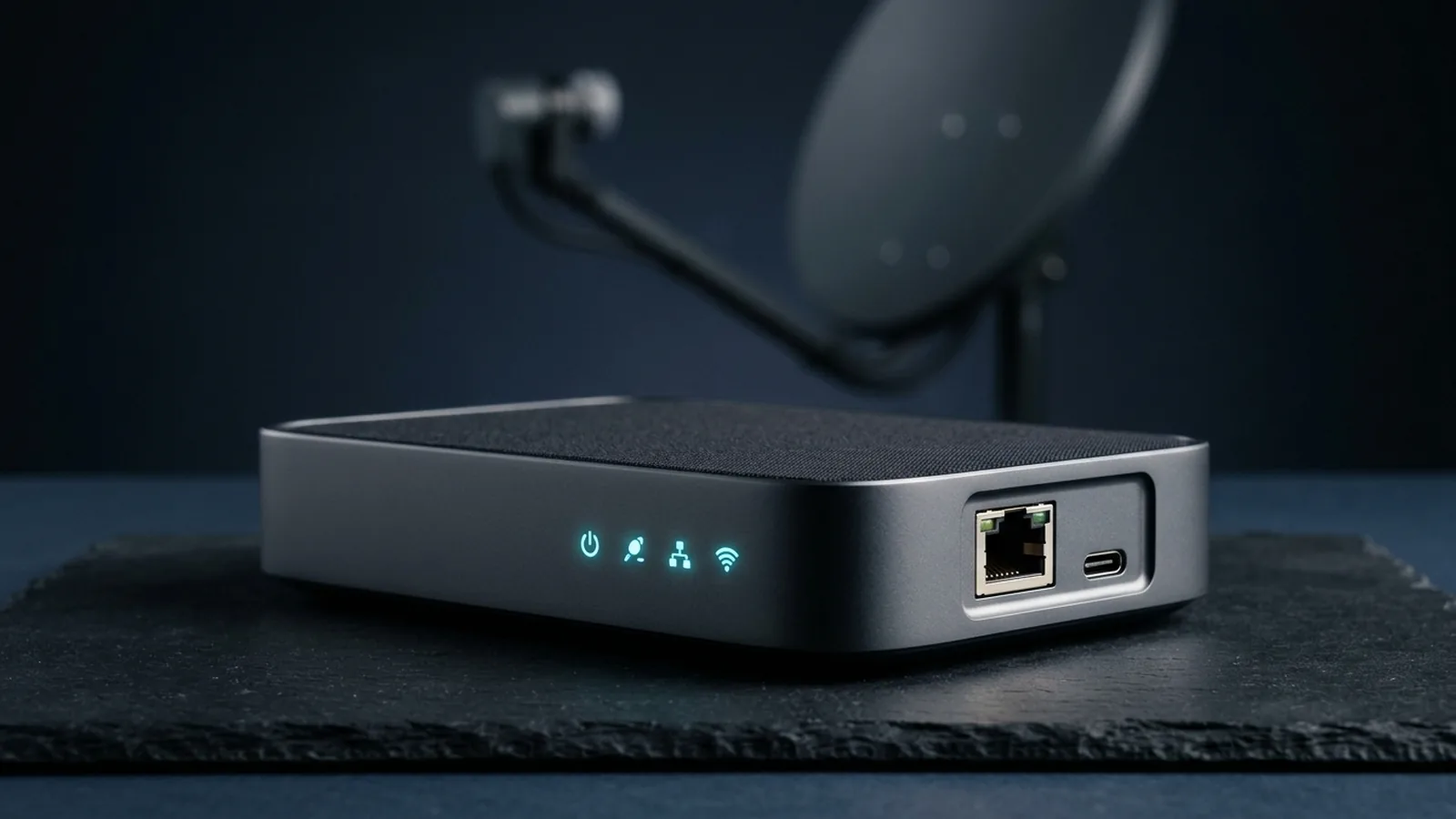
On August 13, 2026, Starlink filed its first Wi-Fi 7 router — internally designated UTR-261 — for FCC equipment certification. That's a routine-sounding regulatory filing, but it happened under a very specific exemption from the same router ban that's kept a much larger router brand from selling comparable hardware in the US at all.
What Got Filed
The UTR-261 is Starlink's first router built around Wi-Fi 7, and the FCC filing lists a concrete hardware spec: Power over Ethernet (PoE) support, one WAN port (which also handles AC power via a PoE adapter), two LAN ports, and a USB-C port. It's a compact, single-box design that leans on Wi-Fi 7's Multi-Link Operation for better reliability in congested environments — the same core benefit we cover in our general Wi-Fi 7 breakdown.
Why This Filing Was Only Possible in August 2026
Under the FCC's March 2026 ban on foreign-manufactured consumer routers, Starlink wouldn't have been able to file a new router for certification at all without an exemption — and it got one, on July 27, 2026, specifically covering devices manufactured in Vietnam, valid through February 1, 2028. The UTR-261 filing, roughly two weeks later, is the first concrete product to use that exemption. Without it, this router simply wouldn't be legally importable or sellable in the US market right now.
The Part That Makes This a Story, Not Just a Spec Sheet
TP-Link — a company that publicly described the FCC's new scrutiny as a "bar" being set for the entire router industry — has not received a comparable exemption, because TP-Link hardware was the majority source of the Flax Typhoon botnet that triggered the original ban. So while Starlink can now bring a brand-new Wi-Fi 7 router to market under a country-specific manufacturing exemption, TP-Link is still working through the same certification process it publicly framed as an industry-wide standard, without yet clearing it for itself.
| Detail | UTR-261 |
|---|---|
| Filed for FCC certification | August 13, 2026 |
| Wi-Fi standard | Wi-Fi 7 (802.11be) |
| Ports | 1x WAN (PoE-powered), 2x LAN, 1x USB-C |
| Legal basis for the filing | Starlink's July 27, 2026 conditional FCC exemption (Vietnam-manufactured devices) |
| Exemption expires | February 1, 2028 |
What This Means for Starlink Customers
If the UTR-261 clears the rest of the certification process, it would give Starlink subscribers a purpose-built Wi-Fi 7 router option directly from the company, instead of pairing a Starlink terminal with a third-party mesh router — a setup we've covered before with the Netgear Orbi RBK752. A first-party Wi-Fi 7 router that's actually designed around Starlink's hardware and use case is a meaningful upgrade path for anyone already on the service.
Our Take
This filing is a small story on its own — one router, one FCC form. What makes it worth covering is what it reveals about how the router ban is actually playing out five months in: exemptions are narrow, country-specific, and time-boxed, and getting one depends less on brand size than on whether a company can currently prove a clean supply chain. Starlink cleared that bar in July. TP-Link, the company whose hardware made the bar necessary in the first place, still hasn't.
How This Compares to Pairing a Third-Party Router With Starlink
Right now, most Starlink customers who want mesh Wi-Fi or better coverage than the stock terminal provides end up pairing it with a third-party router — we've covered exactly that setup with the Netgear Orbi RBK752. That approach works, but it means troubleshooting two separate ecosystems when something goes wrong: is the issue the Starlink terminal, the router, or the handoff between them? A first-party Wi-Fi 7 router built specifically around Starlink's connection characteristics — satellite latency patterns, periodic obstruction handling, dish-to-router link behavior — has a real chance of handling those edge cases more gracefully than generic third-party hardware that was never designed with satellite internet in mind.
What "Designed Around Starlink's Use Case" Could Actually Mean
Satellite internet has connection characteristics that differ meaningfully from fiber or cable — brief obstruction-related dropouts as satellites hand off, and latency patterns shaped by orbital geometry rather than a fixed wired path. A router built in-house by the same company that operates the satellite network is positioned to tune buffering, connection retry behavior, and Wi-Fi 7's Multi-Link Operation specifically around those patterns, rather than treating the Starlink terminal as a generic WAN input the way a third-party router has to. None of that is confirmed yet from the FCC filing alone — filings describe hardware, not firmware behavior — but it's the logical case for why a first-party option matters beyond just convenience.
What Happens Next
An FCC equipment certification filing is a required step before a device can be legally sold, but it isn't itself a release date — there's typically a gap of weeks to a few months between filing and retail availability, and specs listed in a filing can still change before launch. We'll update this piece with pricing and availability details as soon as Starlink confirms them.