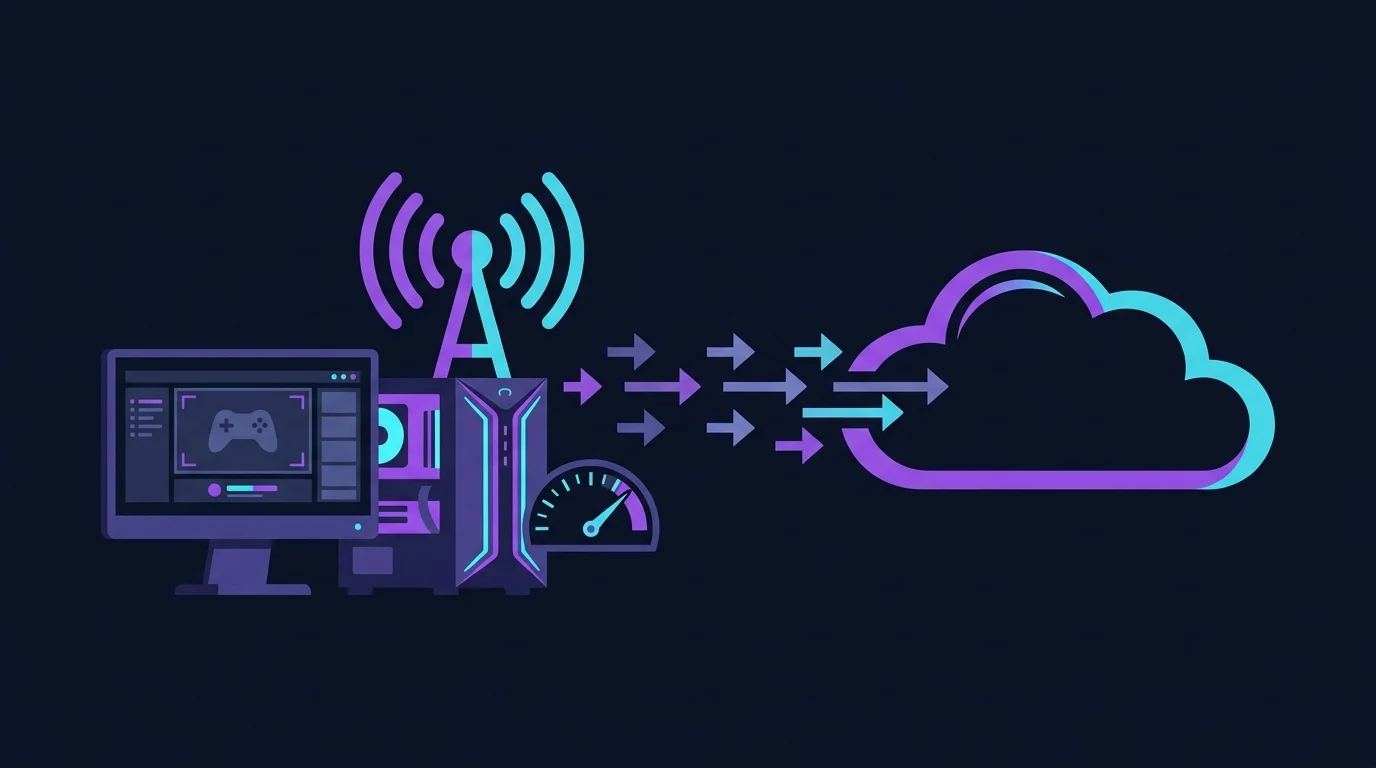
Twitch enforces a hard bitrate ceiling of 8 Mbps for the vast majority of streamers (partners with Enhanced Broadcasting enabled are a separate, higher-tier exception) — which means the "best" bitrate question at 1080p 60fps isn't really about finding a magic number so much as understanding how to use that fixed ceiling as efficiently as possible.
The Actual Recommended Range
For 1080p at 60fps specifically, most encoding guidance converges on 6,000-8,000 kbps (6-8 Mbps) as the practical working range, right up against Twitch's platform ceiling. Going meaningfully below that range at 1080p 60fps tends to show visible compression artifacting during fast motion — exactly the scenario 60fps content most often involves (gaming, sports, fast-paced action) — since more frames per second means less data budget available per individual frame at a fixed total bitrate.
Why 60fps Specifically Makes This Trickier Than 30fps
Doubling the frame rate from 30 to 60 doesn't just double smoothness — it effectively halves the bitrate budget available per frame if the total bitrate stays the same. This is exactly why 1080p 60fps content is more prone to visible compression artifacts at a shared bitrate ceiling than 1080p 30fps content is: the encoder has meaningfully less data to work with for each individual frame, even though the total per-second bitrate number looks the same on paper.
What Your Upload Speed Actually Needs to Support
The often-cited rule of thumb is having upload bandwidth at least 1.5x your target streaming bitrate, to leave headroom for network variance without dropped frames. For an 8 Mbps stream, that means roughly 12 Mbps of genuinely stable, sustained upload — not just a burst peak number from a speed test, but a number you can reliably sustain for the full duration of a stream, including with anything else running on the network at the same time.
Why a "Fast Enough" Speed Test Doesn't Guarantee a Clean Stream
A one-time speed test showing 50 Mbps upload doesn't guarantee a stable 8 Mbps stream if that connection has significant jitter or periodic bufferbloat-driven congestion — streaming needs sustained, consistent throughput throughout the entire broadcast, not just a good peak number. This is the same underlying issue covered in the loaded vs unloaded ping breakdown — a connection's behavior under sustained load is what actually matters for streaming, not its idle best-case number.
Practical Encoder Settings Worth Checking
- Use a CBR (Constant Bitrate) rate control mode, not VBR, for live streaming specifically — Twitch and most platforms expect a steady, predictable bitrate rather than one that fluctuates with scene complexity.
- Set keyframe interval to 2 seconds, which is Twitch's documented recommendation and affects how quickly viewers' streams recover after a brief network hiccup.
- Consider the newer, more efficient encoding presets your GPU or CPU supports — modern encoder presets can deliver visibly better quality at the same fixed bitrate compared to older, less efficient encoder settings, which matters more the harder you're pushing against the 8 Mbps ceiling.
When to Consider Dropping to 1080p 30fps Instead
If your actual sustained upload can't comfortably clear the roughly 12 Mbps headroom target, or your content isn't especially motion-heavy, dropping to 1080p 30fps frees up significantly more bitrate budget per frame at the same total ceiling — often producing a visibly cleaner image than a stretched, artifact-prone 60fps stream squeezed into the same 8 Mbps limit.
Frequently Asked Questions
Does Twitch Partner status actually raise the bitrate ceiling?
Partners with Enhanced Broadcasting enabled have access to higher bitrate options than the standard 8 Mbps ceiling, though this is a separate program with its own eligibility requirements, not something available by default to all partners.
Is a wired connection necessary for streaming, or is good WiFi enough?
Wired is strongly preferable for streaming specifically because sustained, jitter-free upload matters more for a live broadcast than for almost any other home internet use case — the same reasoning that applies to competitive gaming applies here, arguably more so given the longer sustained duration.
Why does my stream look fine locally in OBS but bad on Twitch?
This usually points toward either insufficient sustained upload bandwidth causing Twitch-side re-encoding artifacts, or a bitrate/encoder setting mismatch — OBS's local preview isn't compressed the same way the actual uploaded stream is.
Testing Your Actual Setup Before Going Live
Most streaming software includes a way to record locally at your intended settings without actually going live, which is a genuinely useful way to check for dropped frames and encoder strain before an audience is watching. Reviewing that local recording for stutter or artifacting during your typical content's fast-motion moments is a more reliable check than trusting a one-time speed test number alone.
It's also worth checking your specific game or content's actual motion intensity before assuming 60fps is necessary at all — turn-based games, strategy titles, and slower-paced content often look essentially identical to viewers at 30fps, freeing bitrate headroom that matters more for genuinely fast-paced titles where the frame rate difference is actually visible.