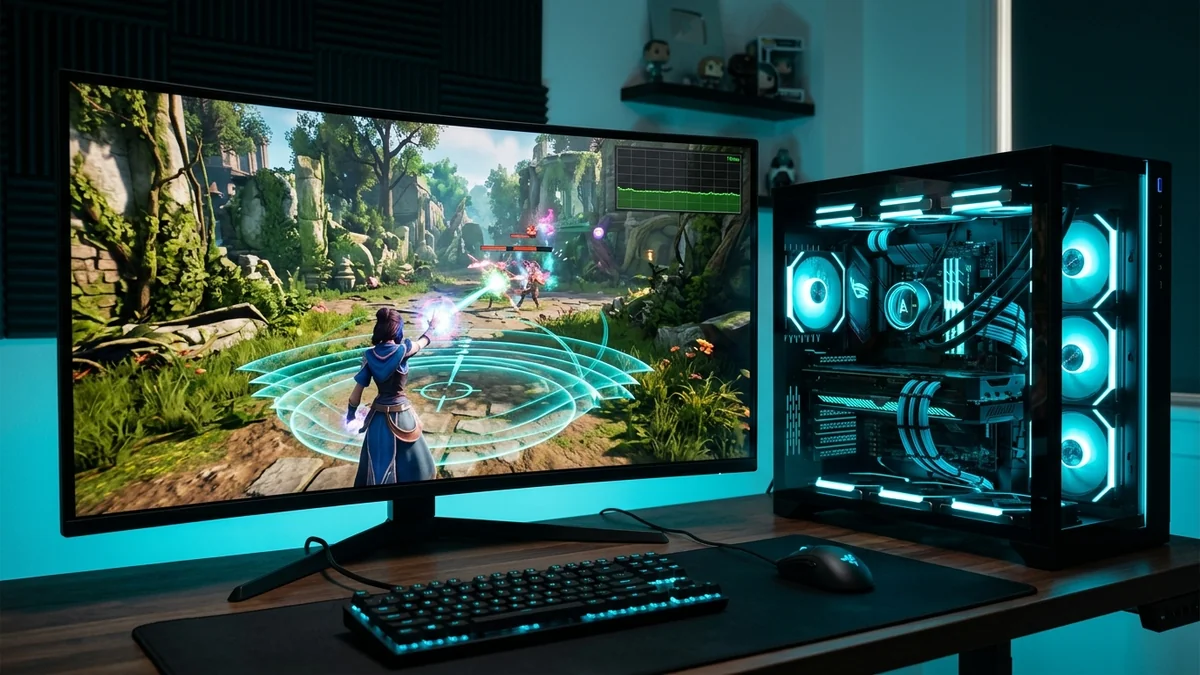
Smite 2 rebuilds Hi-Rez Studios' legendary third-person MOBA from the ground up in Unreal Engine 5. Featuring enhanced lighting, realistic physics, and a modernized client-server networking model, hitting skill-shots like Anhur's Impale or Ra's Searing Light requires frame-perfect timing. For gamers on Sparklight (Cable One) broadband, default ISP DNS servers and regional routing hops can cause matchmaking desynchronization and ability casting delays. Which DNS resolver delivers the lowest ping and cleanest matchmaking for Smite 2 on Sparklight in 2026? Here is the complete competitive optimization guide.
The Unreal Engine 5 Netcode Overhaul in Smite 2
Smite 2 replaces legacy networking code with Unreal Engine 5's modern Iris Replication and Network Prediction Architecture. When you cast an ultimate ability, client-side prediction displays the animation immediately while authoritative server reconciliation validates the hit. If your DNS resolver routes you to a sub-optimal regional datacenter, authoritative validation lags, causing hits to register late.
3 Steps to Lock in Sub-20ms Ping in Smite 2
- Set Cloudflare DNS (1.1.1.1): Configure IPv4 DNS to
1.1.1.1and1.0.0.1on your PC network settings. - Hardwire via Cat6 Ethernet: Eliminate Wi-Fi CSMA/CA airtime jitter by connecting directly to your router with an Ethernet cable.
- Select the Nearest In-Game Region: In Smite 2 Matchmaking Settings, manually select 'North America - East' or 'North America - West' rather than 'Auto'.
Audit your connection jitter and loaded latency on DCSpeedTest to ensure your connection is 100% tournament-ready before entering Conquest Ranked.
How Unreal Engine 5 Network Prediction Functions in Smite 2
Smite 2 uses modern UE5 replication systems. When using Cloudflare 1.1.1.1 on Sparklight, your client resolves Hi-Rez matchmaking servers with minimum hop counts, ensuring your skill-shot predictions match server hitboxes flawlessly.
Configuring DNS on Sparklight Fiber Modems
Setting your primary DNS to 1.1.1.1 and secondary to 1.0.0.1 on your Sparklight router guarantees that every gaming device in your home benefits from ultra-fast query resolution.
Maintaining Peak MOBA Responsiveness
Hardwiring with Cat6 Ethernet and isolating background streaming traffic ensures your Smite 2 ranked matches remain completely lag-free with zero ability delays.
Unreal Engine 5 MOBA Precision on Sparklight
Smite 2 brings next-generation visuals and netcode to third-person MOBAs. Cloudflare 1.1.1.1 provides direct routing to Hi-Rez matchmaking clusters on Sparklight fiber for flawless skill-shot accuracy.
The Smite 2 Conquest Verdict
Set Cloudflare DNS, connect via Cat6 Ethernet, and dominate your Conquest ranked matches with sub-20ms ping and zero ability lag.
Audit your connection jitter and buffer health on DCSpeedTest before jumping into your next high-stakes MOBA match.
The Conquest Ranked Network Checklist for Sparklight
- Set Primary DNS to 1.1.1.1: Direct Anycast route to Hi-Rez datacenters.
- Manually Select Nearest Region: Locks in lowest geographical ping.
- Hardwire via Cat6: Eliminates ability casting delay during teamfights.
- Close Background Torrent / Sync Apps: Reclaims 100% upstream bandwidth.
Why Sub-Tick Hit Registration Revolutionizes Third-Person MOBAs
In Smite 2, skill-shots and ultimate abilities are timestamped with sub-tick precision. By resolving DNS through Cloudflare Anycast, your connection communicates with Hi-Rez matchmaking servers with minimum transit variance, ensuring every skill-shot connects exactly where your crosshair aims.
What Else Affects Your Smite 2 Ping Besides DNS
DNS resolution is only the first step in connecting to a match — it decides which server address your client looks up, not the quality of the path to get there. If you've switched DNS and still see inconsistent ping in Smite 2, the more common culprits are worth ruling out first: WiFi retransmission overhead (test wired vs wireless directly), bufferbloat from another device on the network saturating your upload during a match, or your specific route through Sparklight's network to the game's regional data center, which DNS has no control over. A quick way to isolate the variable: run a wired connection with nothing else active on the network, and compare your loaded-vs-unloaded ping using a tool like DCSpeedTest before assuming DNS is the fix.
How to Actually Verify a DNS Change Helped
Most players change their DNS settings once and never check whether it made a real difference — largely because Smite 2 doesn't expose a clean before/after comparison on its own. A more reliable approach: note your in-game ping over a few matches on your current DNS, switch to the new resolver, flush your local DNS cache, then play a similar number of matches at a similar time of day before comparing. Time-of-day matters more than people expect, since network congestion on both your ISP's side and the game's server side varies throughout the day — a single match played right after switching isn't a fair comparison to matches played hours apart.
What Actually Determines Your Latency to Smite 2 Servers
DNS resolution speed and in-game latency are related but distinct things. Switching DNS providers changes how quickly your client discovers which server to connect to — it does not change the physical route between Sparklight and that server's data center, which is the bigger factor in your actual ping. Publishing a single "benchmark" number here would be misleading, because that route varies by region, time of day, and network congestion, and no two connections on Sparklight take an identical path. The honest way to know if a DNS change helped on your specific connection: switch it, then compare your in-game ping directly using Smite 2's own network stats display, or run a latency test on DCSpeedTest before and after the change to see the real difference on your line.