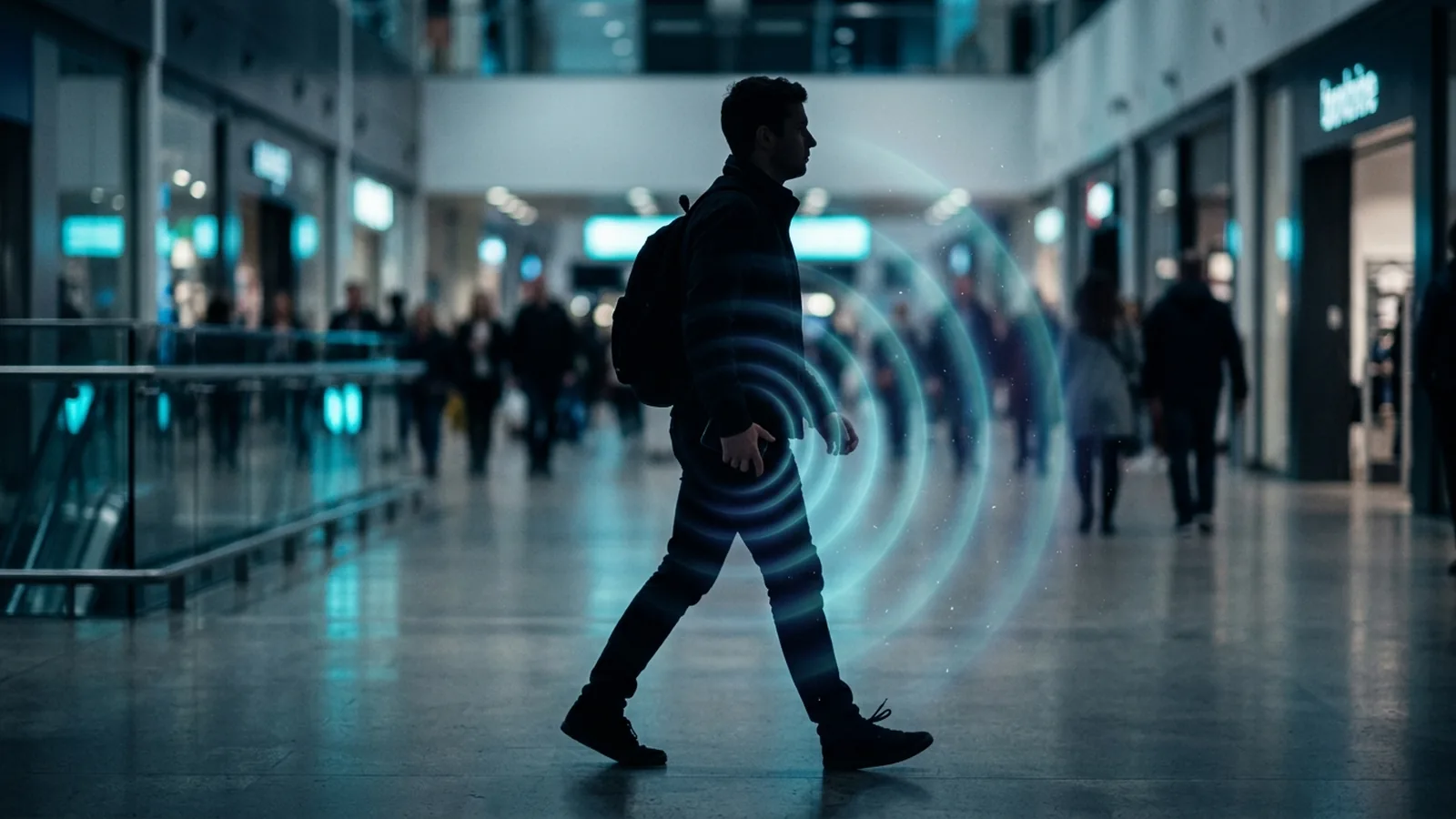
When your phone's Wi-Fi is turned on, it doesn't just passively wait to be connected — it actively sends out probe requests looking for networks it remembers, essentially announcing "is my home Wi-Fi nearby?" to anything listening. That's the mechanism behind a real, well-documented category of retail and public-space Wi-Fi tracking, and it's a reason to turn Wi-Fi off overnight beyond just saving battery.
How Probe Requests Actually Work
To reconnect to networks quickly, phones periodically broadcast probe requests containing the names of previously-joined Wi-Fi networks, searching for any of them in range. Any Wi-Fi receiver nearby — including ones deployed specifically for this purpose in malls, airports, and stores — can pick up these broadcasts and log them, building a picture of which devices pass through repeatedly, how long they linger, and in some cases correlating the broadcast network names to infer information about where else that device has been.
MAC Address Randomization Has Reduced, Not Eliminated, This
It's worth being accurate here rather than alarmist: modern phones (both iOS and Android, in their current default configurations) now randomize the MAC address used for these probe broadcasts, which makes it much harder to track a specific device consistently across visits compared to a decade ago, when a fixed MAC address made this kind of tracking trivial. This is a real, meaningful privacy improvement — but it doesn't eliminate probe-request broadcasting itself, and some tracking systems have adapted with other correlation techniques (timing patterns, signal strength, behavioral fingerprinting) that don't rely purely on a fixed MAC address.
Why Retail and Venue Wi-Fi Tracking Is a Real, Documented Industry
This isn't a fringe conspiracy concern — Wi-Fi-based footfall analytics is a genuine, openly marketed product category sold to retailers and venue operators specifically to measure repeat visits, dwell time, and store-to-store movement within a mall, using exactly this probe-request mechanism (sometimes combined with actual network connections when shoppers join a store's free Wi-Fi). It's a legitimate business analytics tool from the seller's perspective, and a genuine passive tracking mechanism from the perspective of anyone whose phone is broadcasting.
What Turning Off Wi-Fi Overnight Actually Accomplishes
At home overnight, this specific tracking concern isn't really relevant — the risk is about being in public spaces with your Wi-Fi radio active, not about your own house. The more direct overnight benefit of turning Wi-Fi off is battery and reduced background network chatter, not defeating retail tracking specifically. Where the probe-request point actually matters practically: turning off Wi-Fi (or enabling airplane mode) when you're out in public spaces you don't want tracking your movement — malls, transit hubs, event venues — is the more relevant moment to apply this, not necessarily at home while you sleep.
A More Useful Habit Than "Wi-Fi Off At Night"
If probe-request tracking specifically concerns you, the more effective habit is disabling Wi-Fi (or using airplane mode) while moving through public spaces where footfall tracking is common, rather than focused only on your own bedroom overnight — your phone isn't broadcasting anything meaningful to track while it's asleep on your nightstand connected to your own home network.
Our Take
This is a case where the underlying mechanism is real and well-documented, but the popular framing ("turn off Wi-Fi at night to stop tracking") points the habit at the wrong moment. The privacy-relevant window is when you're out in public with Wi-Fi active, not while you're home asleep — worth knowing so you apply the habit where it actually does something.
What This Means in Practice, Concretely
If you regularly walk through the same shopping center, transit hub, or large venue, and that venue has deployed Wi-Fi analytics infrastructure (a genuinely common setup in modern retail), your phone's probe requests can contribute to that system's picture of visit frequency and movement, independent of whether you ever join their network on purpose. This isn't a hypothetical edge case — Wi-Fi-based footfall analytics is a real product category actively sold to venue operators specifically for this purpose.
Simple Habits That Actually Address This
Beyond overnight Wi-Fi toggling, a few habits address the underlying concern more directly: periodically clearing the list of remembered/saved networks on your phone (fewer remembered SSIDs means fewer names broadcast in probe requests), keeping your phone's OS updated (MAC randomization and related privacy protections have improved with each major mobile OS release), and, for anyone genuinely concerned about being tracked through a specific venue, using airplane mode while physically inside it rather than relying on Wi-Fi being merely "not connected" to anything.
Our Take
The mechanism behind this is real and worth understanding, but the popular "turn it off at night" advice misapplies where the actual exposure happens. Your phone sitting on a nightstand isn't broadcasting anything meaningful to track — the moments that matter are the hours you spend walking through public spaces with Wi-Fi active, which is a genuinely different habit to build than a bedtime routine.