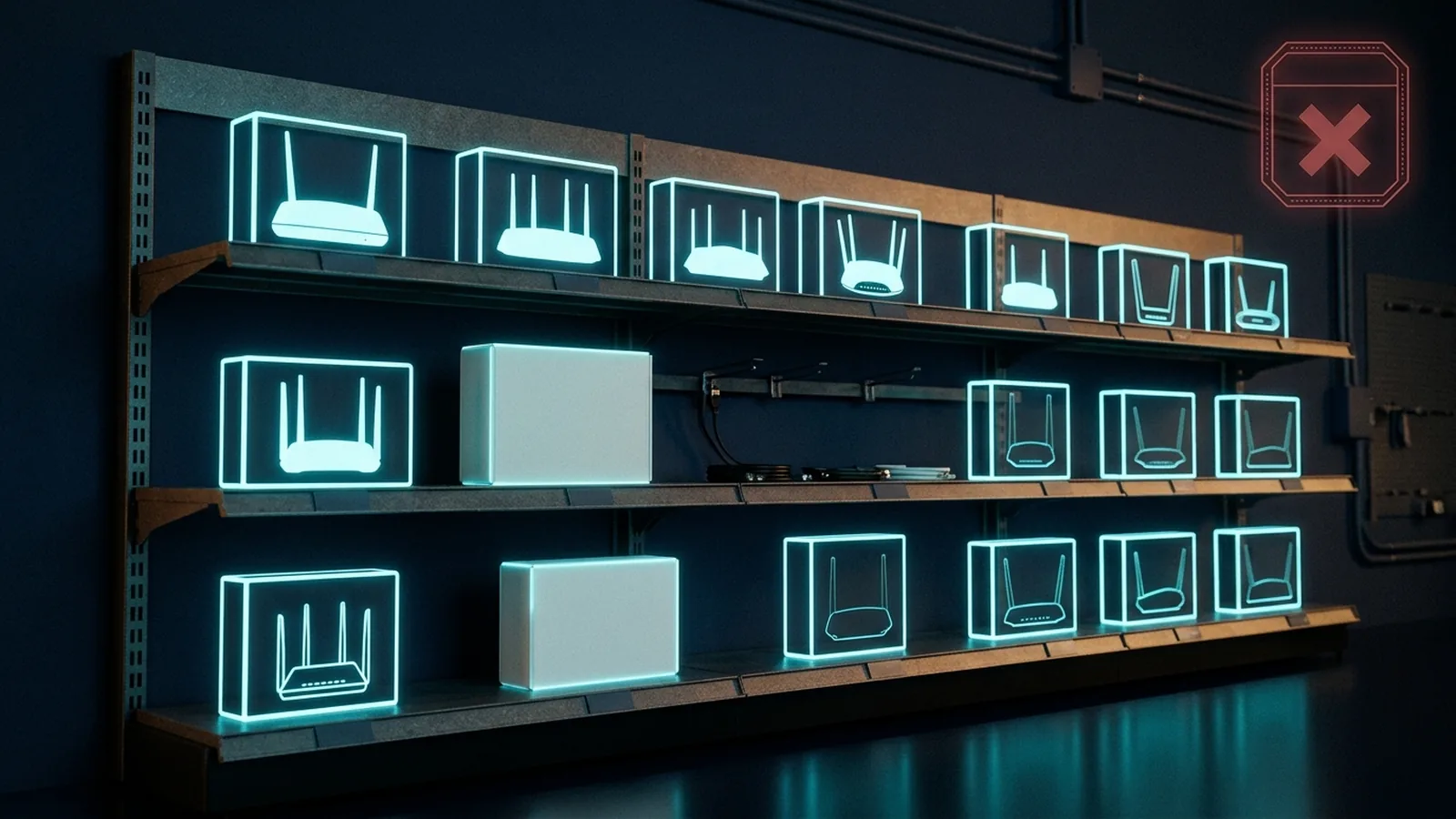
On March 23, 2026, the FCC banned the sale and import of foreign-manufactured consumer-grade routers in the United States. The problem almost nobody flagged in advance: virtually no consumer router sold in the US is actually made here — which means the ban created an immediate supply gap, not just a policy headline.
What the Ban Actually Covers
The rule targets consumer-grade networking hardware manufactured outside the United States — routers, mesh systems, and similar home networking gear. It's an import and new-sale restriction, not a recall: routers already installed in homes are not affected by the rule itself. The brands named as falling under the restriction include Netgear, ASUS, Eero, Google Nest, Linksys, Ubiquiti, TP-Link, and Synology — which, between them, covers the overwhelming majority of routers sold at retail in the US.
Why the FCC Did This
The stated justification is national security, and the specific trigger is well documented: a botnet known as Flax Typhoon compromised hundreds of thousands of consumer routers — the majority of them TP-Link devices — and used them for distributed denial-of-service attacks, credential spraying against other targets, and as anonymizing relay points for state-linked espionage operations. Router firmware on cheap consumer hardware is notoriously under-patched once a product ages out of active support, which makes it an attractive, quiet target for exactly this kind of large-scale compromise.
The Practical Problem: There's No "Made in USA" Router
This is the part that caught most buyers off guard. Consumer router manufacturing has been concentrated in Asia for over two decades — the same way most consumer electronics are. A blanket ban on foreign manufacturing doesn't have a ready domestic substitute waiting in the wings. The immediate result was a real vacuum: if your router died the week after the ban took effect, there was no simple "buy American instead" option sitting on a shelf.
What's Changed Since March
The FCC didn't leave the ban as a flat wall. Since March, it has been shifting toward what functions as a security certification program rather than a blanket prohibition — manufacturers that can demonstrate transparent supply chains and meet enhanced security controls have started receiving conditional exemptions. Netgear was the first major brand to get one, in April 2026. We cover exactly how that exemption process works, and why one large router brand still hasn't gotten a pass, in a separate article.
| What changed | Detail |
|---|---|
| Effective date | March 23, 2026 |
| Scope | Import/sale of new foreign-manufactured consumer routers |
| Existing hardware | Not recalled or disabled — the rule targets new sales/import, not installed devices |
| Stated cause | National security risk (Flax Typhoon botnet, largely TP-Link devices) |
| Current direction | Moving toward conditional exemptions tied to supply-chain security certification |
What This Means If You Need a Router Right Now
If your router fails today, the practical reality is that most major brands are working through the exemption process rather than being permanently unavailable — but which specific models are cleared to sell changes as new exemptions get granted. Before buying, check whether the specific model you're considering has an active exemption rather than assuming brand-wide clearance, since exemptions have so far been granted case by case rather than to entire manufacturers uniformly.
Our Take
The security concern behind this is real — Flax Typhoon was a genuine, large-scale compromise, not a hypothetical. But a ban with no domestic manufacturing base to fall back on was always going to create exactly the kind of short-term confusion we saw in Q2 2026. The certification-program pivot is the more workable long-term outcome, and it's worth tracking which brands clear it before your next router purchase.
Why This Kind of Ban Is Rare
Blanket manufacturing-origin bans on consumer electronics are uncommon precisely because of the supply-chain problem described above — regulators usually know in advance that there's no domestic substitute ready to fill the gap. The closer precedent most people remember is the restrictions placed on Huawei networking equipment in enterprise and carrier infrastructure starting in 2019, but that targeted a single company's gear in carrier-grade networks, not an entire category of consumer hardware sold at retail. The router ban is a broader, blunter instrument, and that's exactly why it created more immediate friction for ordinary buyers.
A Practical Checklist Before You Buy a Router Right Now
Given that exemption status changes model by model rather than brand by brand, a few concrete steps are worth taking before any router purchase while this is still settling out:
- Check the specific model's listing on the retailer's page for any compliance notice — most major retailers have started flagging exempted models directly.
- Favor recently released models over older stock, since exemptions have generally applied to current-generation hardware first.
- If you're buying refurbished or from a third-party marketplace, confirm the exemption applies to that exact model number, not just the brand name.
- Keep your existing router running as long as it's stable — the ban doesn't affect hardware you already own, so there's no urgency to replace a working router out of caution.