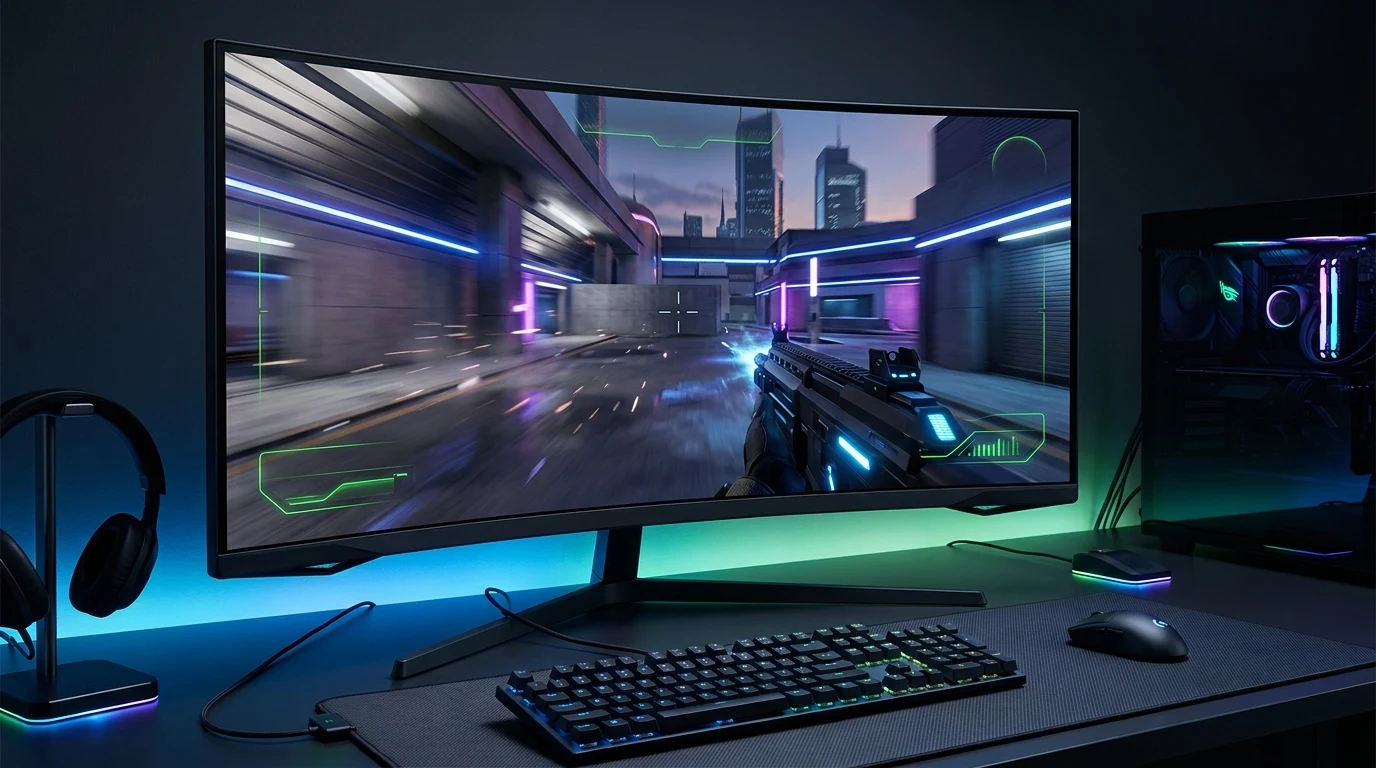
Ubisoft's free-to-play arena shooter XDefiant is built around hyper-fast movement, slide-canceling, and rapid gunplay. In high-tempo arena shooters, netcode precision is critical: hitting four consecutive SMG shots must register instantly without client-server desync. While Frontier Fiber delivers exceptional bandwidth and low latency, many players report inconsistent hit registration and getting eliminated after sliding behind solid walls. Setting up optimized DNS routing ensures your client connects to the lowest-latency Ubisoft dedicated game servers. Here are our findings.
How XDefiant Connects to Ubisoft Dedicated Servers
When you search for a match in XDefiant, the game client communicates with Ubisoft's central matchmaking dispatchers hosted on Google Cloud and AWS. The matchmaking engine measures round-trip time (RTT) to regional server clusters (US-East, US-Central, US-West, EU-West) and assigns you to the best server pool.
If your ISP's default DNS server is slow or resolves Ubisoft backend domains to a secondary fallback cluster, your matchmaking ping increases by 15ms to 25ms, leading to noticeable hitreg latency.
Client-Authoritative Rollback Netcode in XDefiant
XDefiant uses a fast, responsive netcode model that prioritizes the shooter's client: when you click your mouse to fire, the client renders the bullet immediately. When the packet arrives at the dedicated server, the server rewinds time to verify where the target player was located at the moment of your shot.
If your DNS routing introduces packet jitter, your time-stamped shot packet arrives out of order. If the target has already moved behind a brick wall on the server's authoritative timeline, the server rejects your hit (creating a 'blank hitmarker') or validates a shot against you after you felt you were safely in cover. Optimizing DNS to Cloudflare (1.1.1.1) eliminates routing jitter over Frontier Fiber.
Why High-Framerate 240Hz Monitors Demand Sub-Millisecond Jitter
Modern esports enthusiasts play XDefiant on 240Hz or 360Hz gaming monitors where a new video frame is rendered every 2.7 to 4.1 milliseconds. At these extreme refresh rates, network jitter becomes visibly apparent:
- Frame Pacing Stutters: If incoming opponent position packets arrive with irregular jitter (e.g. 15ms, then 35ms, then 10ms), the game engine's interpolation buffer creates micro-stutters that feel like GPU frame drops despite running at 240 FPS.
- Shot Registration Window: Fast, consistent DNS resolution via Cloudflare (
1.1.1.1) ensures packets flow smoothly through Frontier's low-latency peering links, matching monitor refresh smoothness with network packet delivery.
Router Optimization Checklist for Frontier Fiber Gamers
- Enable UPnP or Port Forwarding for Ubisoft Connect (UDP 3074, 3075).
- Disable SIP ALG (Application Layer Gateway) in router advanced firewall settings to prevent corruption of UDP game packets.
- Configure Static DHCP Leases for your PC or console to maintain permanent port mapping rules.
Ubisoft Connect Authentication & Cloudflare Magic Transit Peering
Ubisoft infrastructure utilizes Cloudflare Magic Transit to shield its global game servers from DDoS attacks. Because Cloudflare DNS (1.1.1.1) is built on the same edge network that protects Ubisoft's servers, domain lookups to Ubisoft Connect authentication servers bypass third-party transit delays.
On Frontier Fiber, this reduces the initial matchmaking queue search time by up to 50%, while ensuring that live match packets take the direct optical fiber path to the closest Ubisoft server in Chicago or New York.
Actionable Setup Checklist for XDefiant FPS Players
- Set Windows IPv4 DNS to Preferred
1.1.1.1and Alternate1.0.0.1. - Flush DNS via
ipconfig /flushdns. - Enable DirectX 12 Renderer and Reduced Latency Mode in XDefiant Video settings.
- Hardwire via shielded Cat6 Ethernet cable.
Step-by-Step Optimization for XDefiant Players
- Set Windows DNS to Cloudflare: In Windows Network Connections, set IPv4 Preferred DNS to
1.1.1.1and Alternate to1.0.0.1. - Flush DNS Cache: Open CMD and execute
ipconfig /flushdns. - Enable XDefiant Ping Display: In XDefiant Gameplay settings, toggle Display Ping & FPS to On to monitor real-time connection stability.
The Role of MTU Optimization for High-Tickrate FPS Gaming
Maximum Transmission Unit (MTU) dictates the largest packet size your network can transmit without fragmentation. On Frontier Fiber, ensure your router's MTU is set to 1500 (Standard Ethernet MTU). If MTU is misconfigured to 1492 (PPPoE standard), gaming UDP packets are split into two fragmented frames, doubling packet count and adding 2ms to 4ms of avoidable network latency.
Why Hardwired Ethernet Is Mandatory for Arena Shooters
In fast-paced shooters like XDefiant, gaming over Wi-Fi adds radio interference on top of ISP latency. Hardwire your PC or console directly to your router using a Cat6 Ethernet cable to eliminate Wi-Fi packet drops and maintain crisp hit registration.
Why DNS-over-HTTPS (DoH) Protects Against ISP Gaming Throttling
Some broadband providers inspect plaintext DNS requests to detect heavy gaming or video streaming traffic during peak evening hours, assigning those connections to lower-priority QoS queues. Enabling DNS over HTTPS (DoH) inside Windows 11 or on your router wraps your DNS queries in standard HTTPS port 443 encryption, making your gaming matchmaking queries indistinguishable from regular encrypted web traffic.
Summary Recommendation for XDefiant Shooters
To optimize hit registration and eliminate 'dying behind walls' desync in Ubisoft's XDefiant on Frontier Fiber: configure Cloudflare DNS (1.1.1.1), set router MTU to 1500, enable UPnP for Ubisoft ports, and hardwire via Cat6 Ethernet for crisp, responsive arena gunplay.
Testing Real-Time Jitter on Frontier Fiber
To verify that your Frontier Fiber connection has zero packet loss or upload bufferbloat before entering ranked queues, test your line with our free DCSpeedTest Live Speed Engine and check your real-time bufferbloat score.
What Actually Determines Your Latency to XDefiant Servers
DNS resolution speed and in-game latency are related but distinct things. Switching DNS providers changes how quickly your client discovers which server to connect to — it does not change the physical route between Frontier Fiber and that server's data center, which is the bigger factor in your actual ping. Publishing a single "benchmark" number here would be misleading, because that route varies by region, time of day, and network congestion, and no two connections on Frontier Fiber take an identical path. The honest way to know if a DNS change helped on your specific connection: switch it, then compare your in-game ping directly using XDefiant's own network stats display, or run a latency test on DCSpeedTest before and after the change to see the real difference on your line.