The Space Race for Your Living Room
It’s 2026, and the internet landscape has shifted dramatically. The promise of low-latency satellite internet isn’t just marketing hype anymore—it’s a reality that’s threatening traditional fiber ISPs.
Starlink V3: The Game Changer
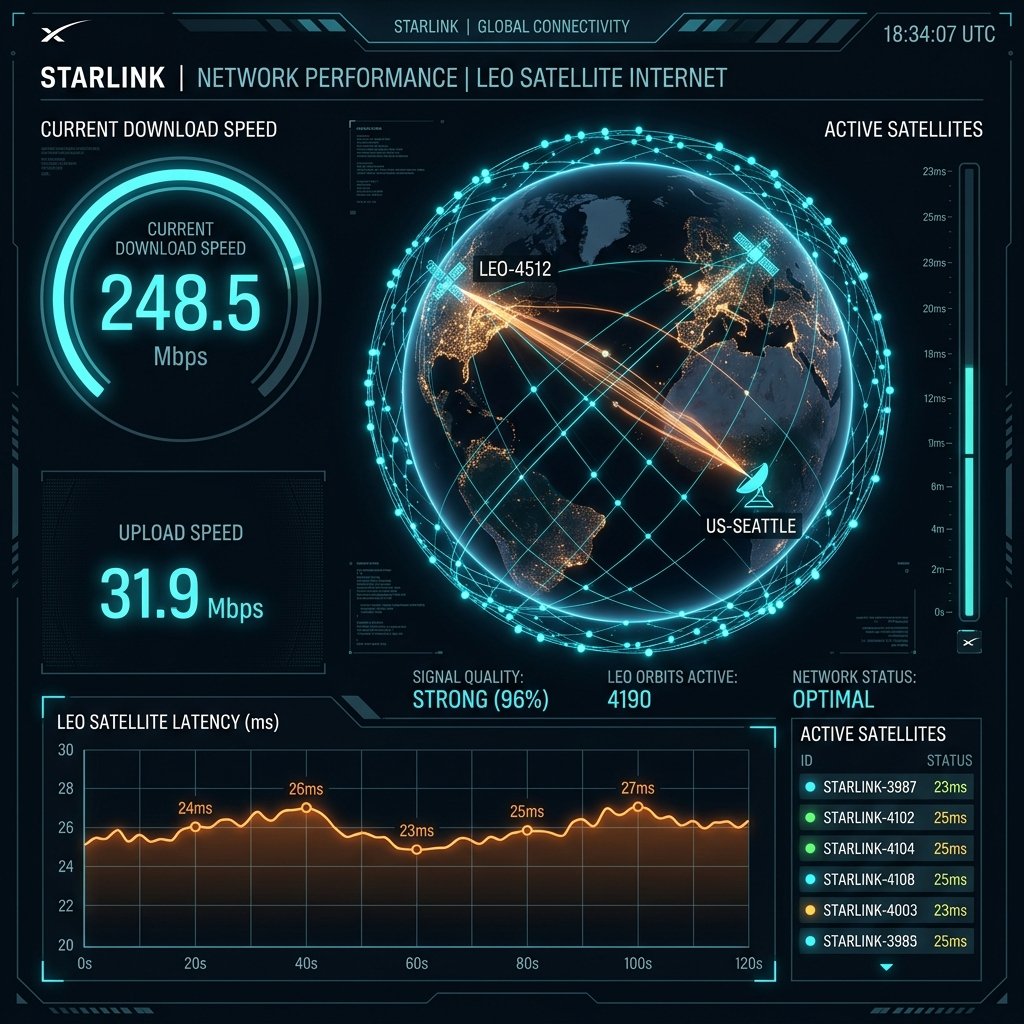
With the full deployment of the V3 constellation, Starlink has achieved what many thought impossible: sub-10ms latency consistently. By utilizing laser links between satellites, data no longer needs to bounce back to ground stations as frequently.
The Verdict
If you live in a city, keep your fiber. The reliability is unmatched. But for anyone in the suburbs or rural areas? Starlink V3 is no longer a compromise—it’s an upgrade.
The Price of Admission
Starlink’s hardware costs roughly $350-$600 upfront depending on your region and dish tier, plus an $80-120/month subscription — noticeably more than most fiber plans, which typically run $50-90/month with little to no equipment cost. You’re paying a premium for coverage where wires simply can’t reach, not for raw value. If fiber is genuinely available at your address, it remains the better value on every metric except portability.
Where Starlink Actually Wins
Beyond rural coverage, Starlink’s real edge is mobility — RVs, boats, remote work cabins, and disaster recovery scenarios where laying physical infrastructure is impossible or impractical. Its biggest remaining weakness versus fiber is capacity during peak hours in dense areas: satellite bandwidth is shared across every user in a region, so speeds can dip noticeably as more neighbors sign up for the same constellation coverage.
Frequently Asked Questions
Is Starlink V3 fast enough for competitive gaming in 2026?
For most game genres, yes — sub-10ms satellite-to-ground latency plus typical total round-trip times of 25-40ms is competitive with average cable connections, though still a step behind fiber’s 5-15ms. For twitch-reflex shooters at a professional level, fiber retains a measurable edge; for the vast majority of players, Starlink V3 is no longer a noticeable handicap.
Should I switch from fiber to Starlink to save money?
No — if fiber is available and affordable at your address, keep it. Starlink costs more per month, requires expensive hardware, and its speeds fluctuate with weather and network congestion in ways fiber simply doesn’t. Starlink’s value proposition is availability where fiber doesn’t reach, not lower cost where it does.