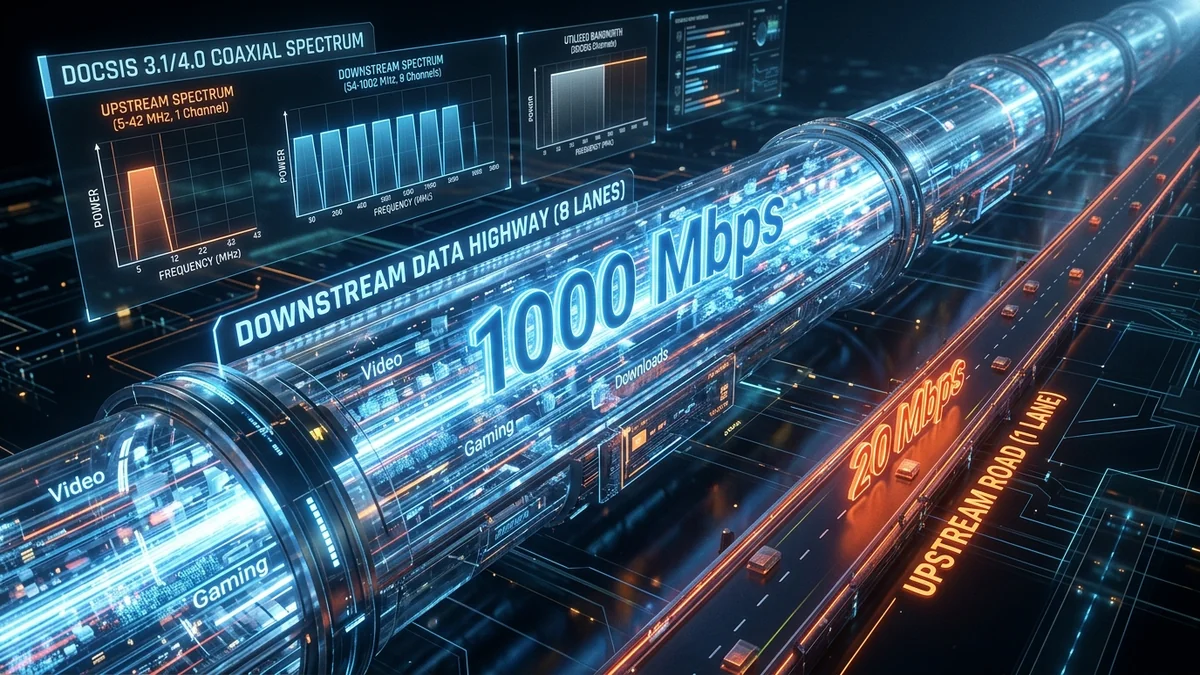
Why Is Download Speed Faster Than Upload Speed? (Asymmetric Broadband Math)
Paying for 500 Mbps download but getting only 20 Mbps upload? Learn the history and engineering behind asymmetric DOCSIS frequency allocations.

Internet guides, hardware reviews, latency optimization, and speedrun tips for the modern web.
Paying for 500 Mbps download but getting only 20 Mbps upload? Learn the history and engineering behind asymmetric DOCSIS frequency allocations.
Experiencing buffering, packet loss, and severe speed drops between 7 PM and 11 PM? Discover why neighborhood oversubscription, DOCSIS contention, and ISP traffic shaping cause peak-hour slowdowns—and how to fix it.
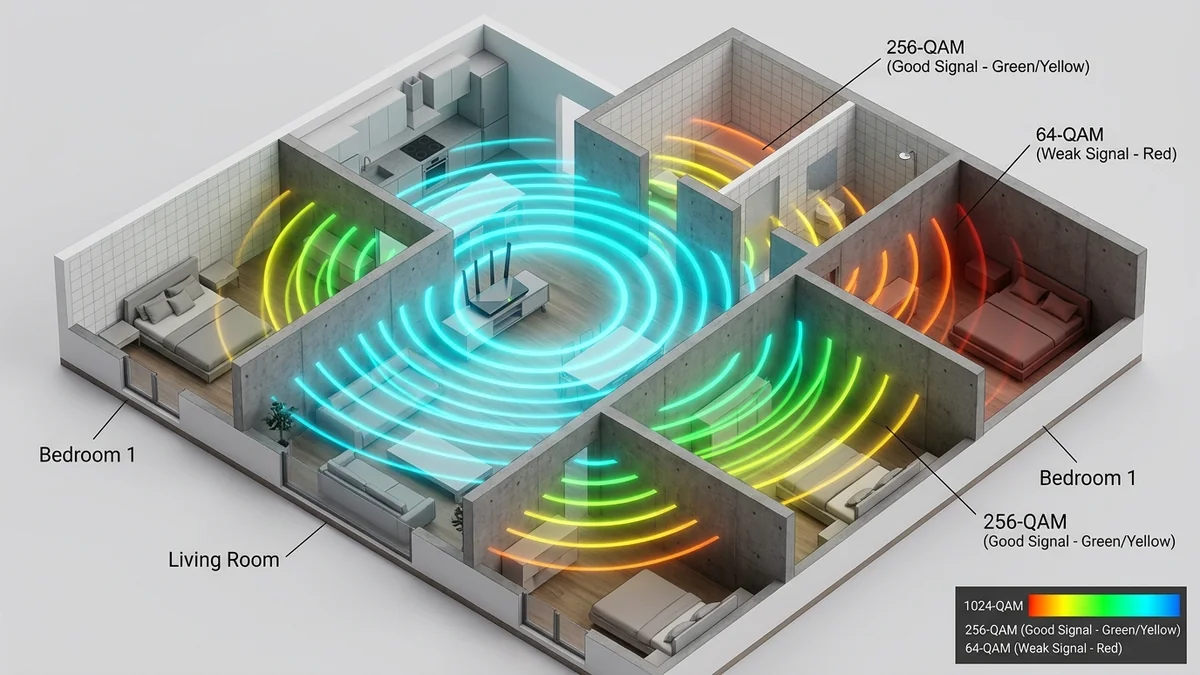
Getting 800 Mbps in the living room but barely 25 Mbps in the bedroom? Uncover how RF free-space path loss, QAM modulation step-down, and wall absorption kill speed.
Experiencing lag spikes, high jitter, and severe speed drops on Spectrum every evening? Learn why neighborhood coaxial node oversubscription occurs and the exact steps to fix your connection.
Before blaming your WiFi in a meeting, it helps to actually know what's causing the lag — because the real cause determines whether it's fixable in the moment or not.
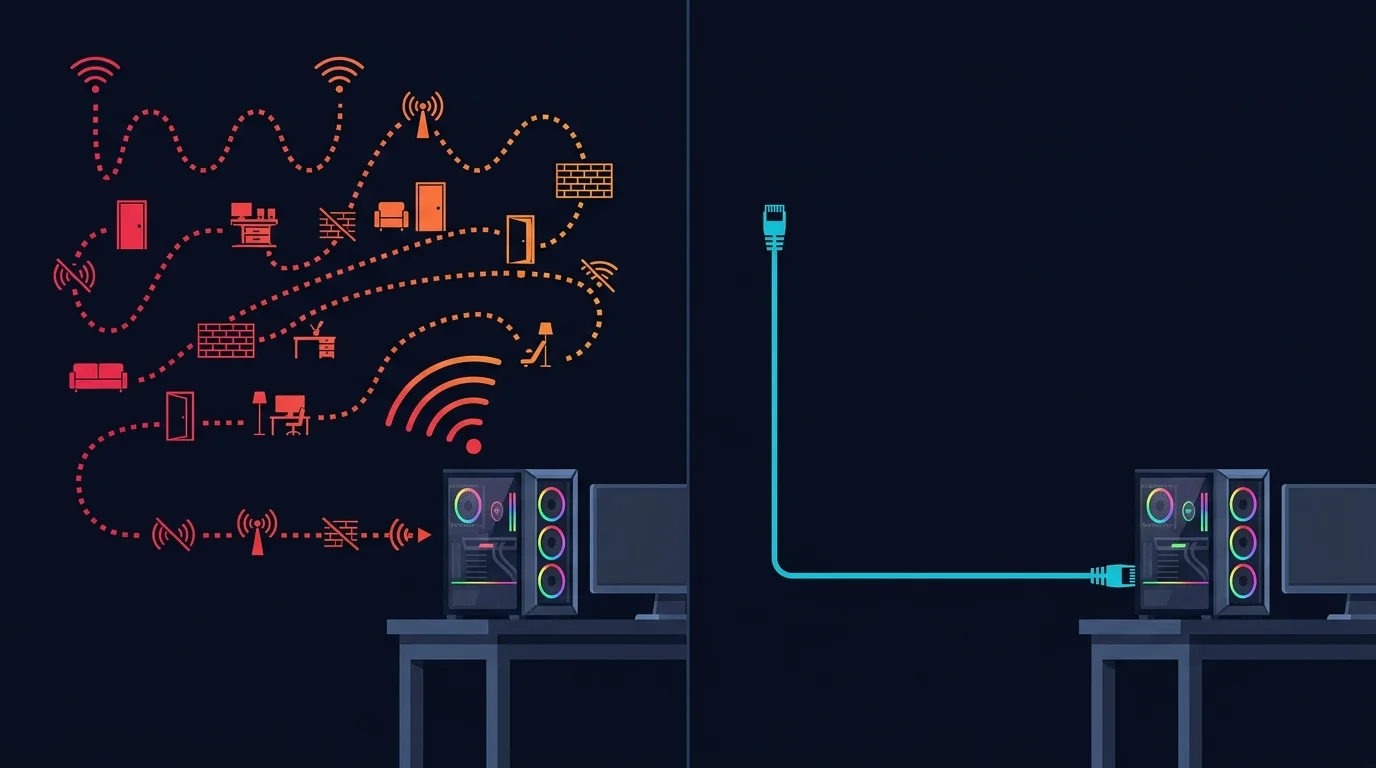
It's not superstition — WiFi introduces specific, measurable disadvantages in fast-paced competitive play that a wired connection simply doesn't have, even with a strong signal.
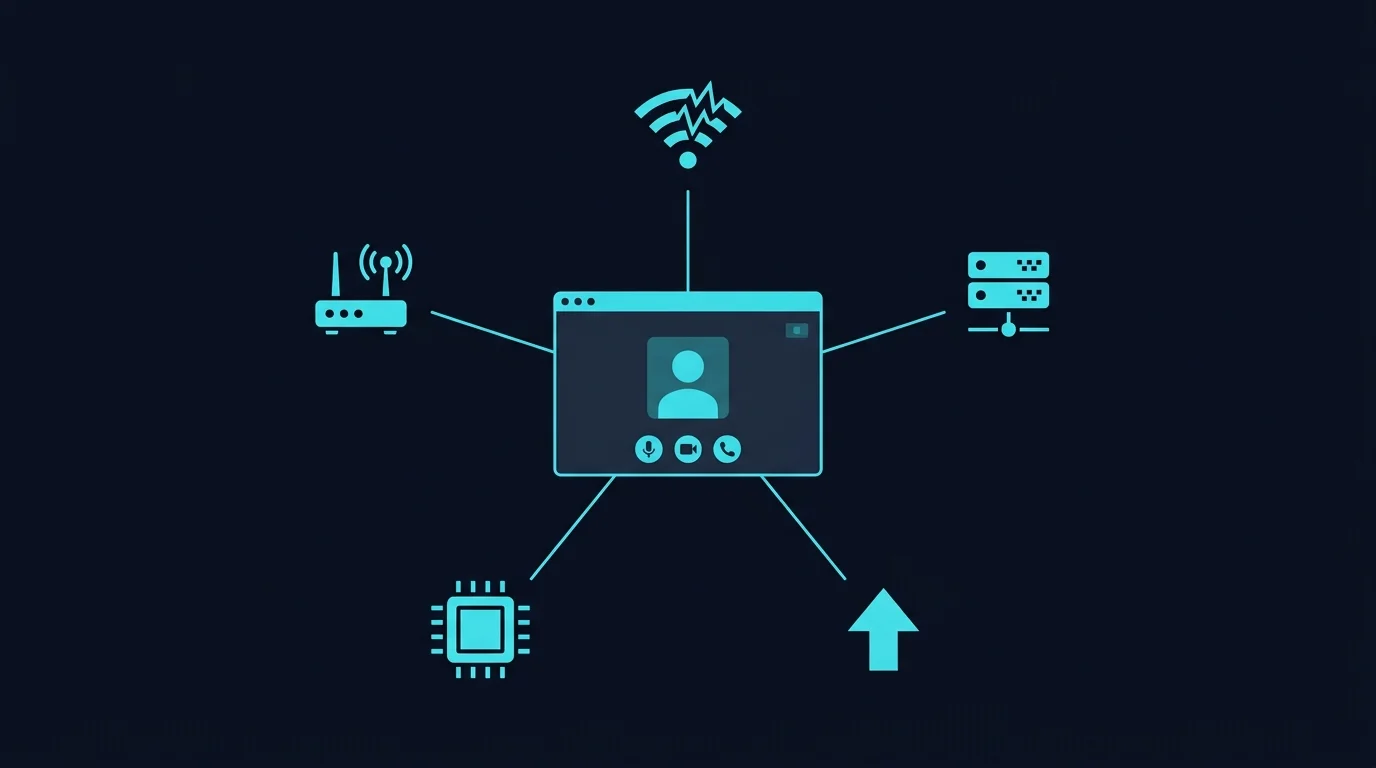
The 'poor connection' warning isn't about your download speed the way most people assume. Here's what Zoom is actually measuring, and why a fast connection can still trigger it.
Starlink is genuinely useful where fiber can't reach, but the physics of satellite bandwidth and fiber's near-limitless capacity point toward coexistence, not replacement.
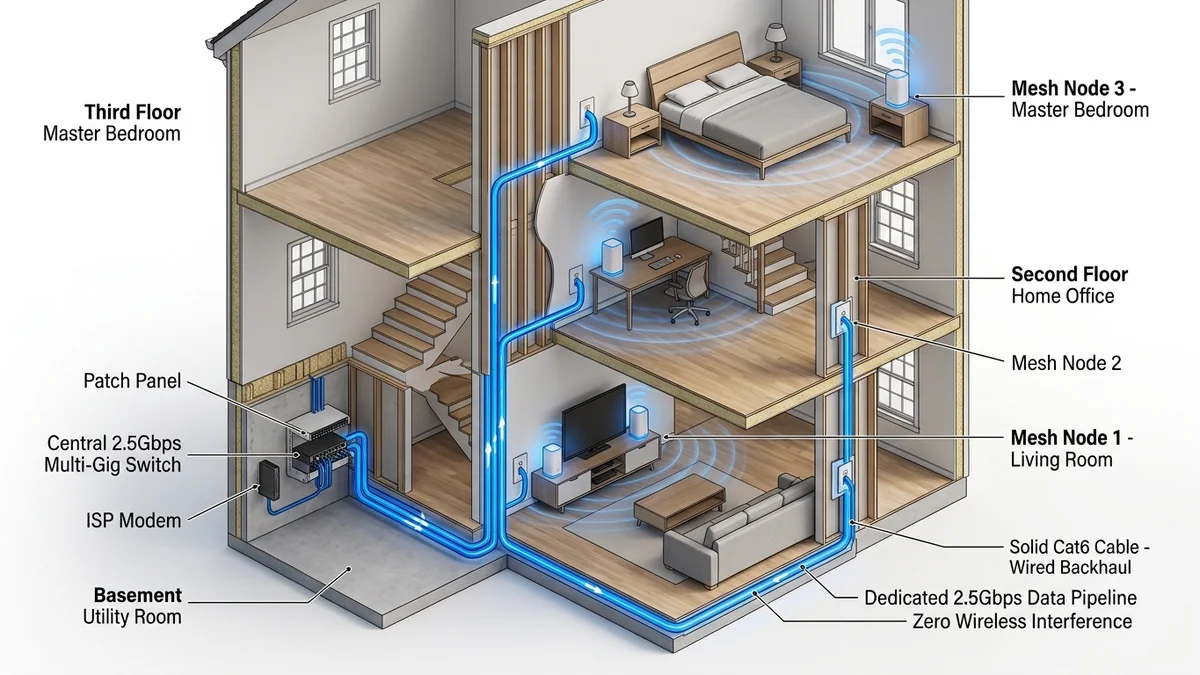
Unlock 100% of your broadband speed on every mesh satellite node. Our complete guide to setting up wired Ethernet backhaul on eero, Deco, and Orbi systems.