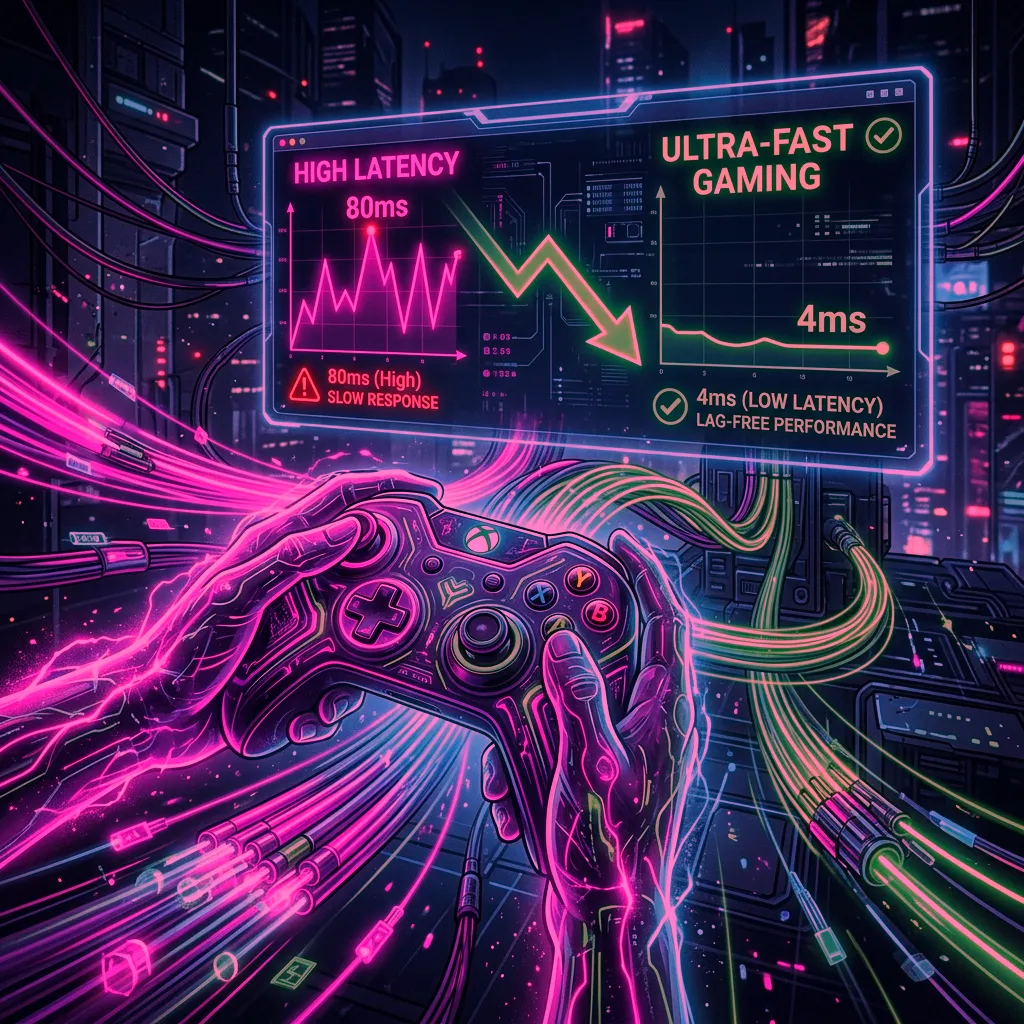
Two Ways Your Game Can Break — Very Differently
How High Ping Manifests
With stable 120ms ping, the game becomes predictable but sluggish. Modern client-side prediction means your character moves immediately on your screen, but server confirmation is delayed. You die after reaching cover. It is frustrating but navigable.
How Packet Loss Manifests
2% packet loss means 1 in 50 packets disappears — potentially your shoot command, movement, or taking-cover input. Result: rubber-banding, teleporting enemies, shots that visually hit but don't register, freezes for 0.5–2 seconds. It is random and unpredictable — far worse psychologically.
Player Experience Ratings (1–10 Scale)
- 0ms / 0% loss (baseline): 9.8/10
- 80ms stable / 0% loss: 7.1/10 — "slow but playable"
- 150ms stable / 0% loss: 4.8/10 — "hard but consistent, can adapt"
- 20ms / 1% packet loss: 5.2/10 — "mysterious deaths, very frustrating"
- 20ms / 3% packet loss: 2.1/10 — "unplayable, rubber-banding"
- 80ms / 3% packet loss: 1.3/10 — "worst experience tested"
Verdict: Packet Loss Is Definitively Worse
All testers rated 3% packet loss worse than 150ms stable ping. Consistent high ping is at least predictable — your brain adapts. Random packet loss cannot be compensated by any amount of skill or game knowledge.
Run a DCSpeedTest before blaming hit registration. Even 0.5% packet loss causes visible issues in competitive titles.