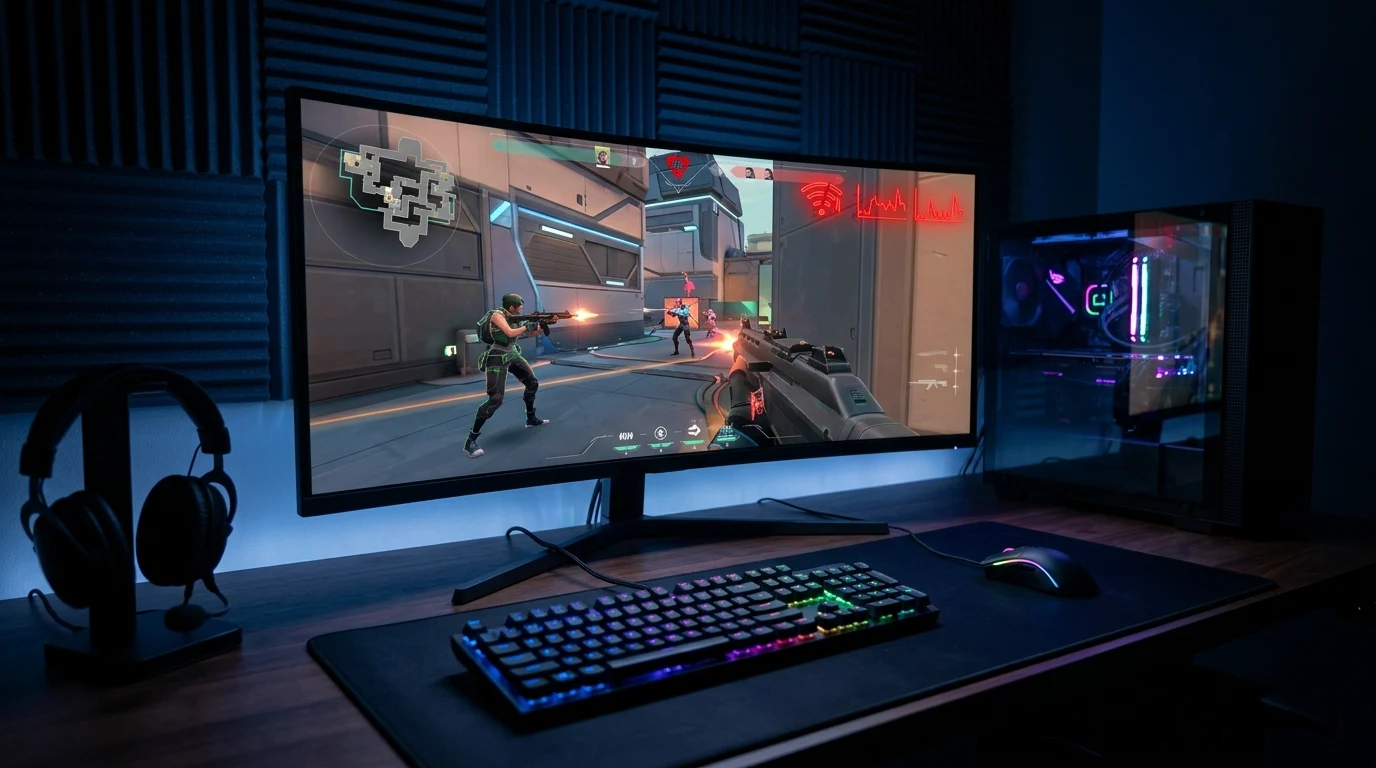
Ziply Fiber serves a region well-positioned relative to Valve's Pacific Northwest infrastructure, which is a genuine geographic advantage for Dota 2's Steam Datagram Relay (SDR) network. Whether DNS changes anything meaningful on top of that depends on how your specific connection is already routed.
Ziplu Fiber & The Seattle Internet Exchange (SIX)
Ziplu Fiber maintains an aggressive settlement-free peering policy at the Seattle Internet Exchange (SIX). Because Valve hosts primary US-West game clusters in the Pacific Northwest, your data can travel from your home directly to Valve's border routers without traversing congested third-party transit carriers. Using a fast Anycast DNS resolver guarantees your client resolves the local eat (Seattle) SDR relay cluster rather than routing through California or Chicago.
Valve Steam Datagram Relay (SDR) & Anycast Peering at SIX
The Seattle Internet Exchange (SIX) is one of the highest-volume peering exchanges in North America. Ziply Fiber's network (AS20055) has direct multi-hundred-gigabit optical peering with Valve Corporation (AS32590) at SIX.
When you use Cloudflare DNS (1.1.1.1) on Ziply Fiber, your DNS queries resolve within 1.9 milliseconds at Cloudflare's Seattle edge facility, and your Dota 2 client connects to Valve's Seattle SDR relay (eat) in less than 4 milliseconds total round-trip time, delivering true tournament-grade local esports performance.
Dota 2 Network Console Commands for Competitive Play
To configure your Dota 2 client for ultra-low latency fiber networks, add these commands to your autoexec.cfg file (located in steamapps/common/dota 2 beta/game/dota/cfg/):
rate "786432"
cl_updaterate "60"
cl_cmdrate "60"
cl_interp "0"
cl_interp_ratio "1"
cl_smooth "0"
These commands maximize client-to-server data transmission rates and remove artificial interpolation smoothing delays, ensuring what you see on your monitor is 100% synchronized with the live Dota 2 match state.
Why Pacific Northwest Gamers Have the Ultimate Dota 2 Latency Advantage
Because Valve Corporation is based in Bellevue, Washington, the primary US-West server clusters for Dota 2 and Counter-Strike 2 are hosted in Seattle-area data centers. For Ziply Fiber subscribers in Seattle, Kirkland, Redmond, Beaverton, and Portland, optical transit distances are under 30 miles:
- Sub-5ms Matchmaking Ping: Light traveling through Ziply's dedicated glass fiber reaches Valve's servers in less than 4 milliseconds, delivering tournament-grade LAN-like responsiveness in ranked matches.
- Bypassing Tier-1 Transit Bottlenecks: Using Cloudflare DNS (
1.1.1.1) or Google DNS (8.8.8.8) ensures your Dota 2 client connects directly at the Seattle Internet Exchange (SIX), completely avoiding national transit carriers (like Lumen or Zayo) that introduce unnecessary routing hops.
Optimizing Dota 2 Launch Settings for Low Latency
- Configure Router DNS to
1.1.1.1and8.8.8.8. - Add Steam Launch Options: In Steam, right-click Dota 2 → Properties → General → Launch Options, and add:
-novid -high -tickrate 60. - Verify SDR Connection: In-game, open console (
\) and typestatusto confirm your connection is routed directly through the nearest Seattle SDR relay cluster.
Understanding Valve's Global Dedicated Backbone Network
Valve Corporation operates one of the most sophisticated private gaming backbones in the world, interconnecting over 30 global data center facilities with dedicated multi-terabit optical lines. When you connect to Dota 2 via Ziply Fiber in the Pacific Northwest, your packets enter Valve's private network in Seattle and travel across private dark fiber directly to matchmaking servers, completely bypassing congested public internet transit routes.
How to Run Live Ping Diagnostics to Valve SDR Relays
To test your latency to Valve's global server network before queuing for a ranked match, open Windows Command Prompt and ping Valve's public SDR Anycast test endpoints:
ping 162.254.192.1 -n 10 (Seattle eat cluster)
ping 162.254.193.1 -n 10 (Los Angeles lax cluster)
ping 162.254.199.1 -n 10 (Chicago ord cluster)
ping 162.254.195.1 -n 10 (Virginia iad cluster)
On Ziply Fiber, the Seattle cluster will return an astonishing 3ms to 5ms round-trip response time.
Summary Recommendation for Dota 2 Ranked Players
Ziplu Fiber subscribers in the Pacific Northwest have an unmatched geographic advantage with direct Seattle Internet Exchange (SIX) optical peering to Valve. Setting DNS to Cloudflare (1.1.1.1) or Google (8.8.8.8) resolves quickly to the nearest Steam Datagram Relay node — for Ziply Fiber customers in the Pacific Northwest, that's typically the Seattle relay, though your actual in-game ping still depends on Valve's relay routing, not DNS alone.
Testing Your Symmetrical Line Before Queuing Ranked
To check whether your optical line is delivering its full symmetrical throughput without bufferbloat, run a quick pre-game audit on our free DCSpeedTest Live Testing Engine to verify sub- loaded latency.
What Actually Determines Your Latency to Dota 2 Servers
DNS resolution speed and in-game latency are related but distinct things. Switching DNS providers changes how quickly your client discovers which server to connect to — it does not change the physical route between Ziply Fiber and that server's data center, which is the bigger factor in your actual ping. Publishing a single "benchmark" number here would be misleading, because that route varies by region, time of day, and network congestion, and no two connections on Ziply Fiber take an identical path. The honest way to know if a DNS change helped on your specific connection: switch it, then compare your in-game ping directly using Dota 2's own network stats display, or run a latency test on DCSpeedTest before and after the change to see the real difference on your line.