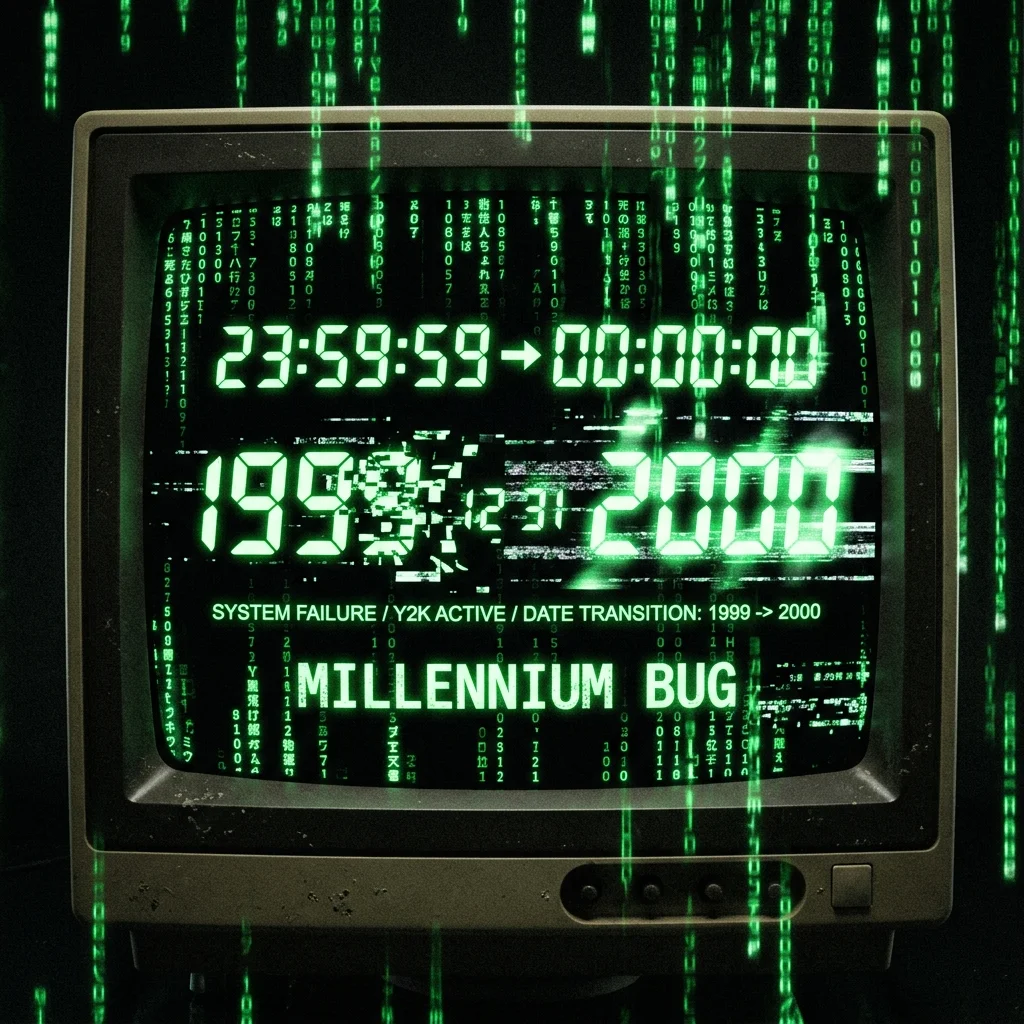
The Y2K Bug Curiosities: The 2-Digit Year Code That Almost Crashed the Global Economy
Written by dalto00@hotmail.com •
Published on May 24, 2026
As the clock ticked down to midnight on December 31, 1999, the world was gripped by a unique kind of panic. People stockpiled water, withdrew cash, and feared planes would fall from the sky. The culprit? The **Y2K Bug** (or Millennium Bug)—a tiny programming shortcut that threatened to crash global infrastructure. In this digital history curiosity, we look back at the code that almost broke the world.
1. The Two-Digit Code Shortcut
In the early days of computing, digital memory was incredibly expensive. To save precious bytes, programmers stored dates using only the last two digits for the year (e.g., “1975” was stored simply as “75”).
This worked perfectly until the turn of the millennium. When the year 2000 arrived, computers storing dates in two digits would roll over from “99” to “00”. Unfortunately, systems would interpret “00” as the year 1900 rather than 2000, causing interest rate calculations to fail, flight schedules to break, and network servers to lock up.
As documented in the Wikipedia Y2K Bug History, the global community spent over $300 billion in software remediation audits to patch COBOL files before midnight arrived.
2. 🔬 Try the Embedded Y2K Rollover Simulator
Experience the Y2K glitch! Click the button below to simulate the rollover from 1999 to 2000 in a vintage 2-digit clock and watch the computer crash and apply the Y2K patch!