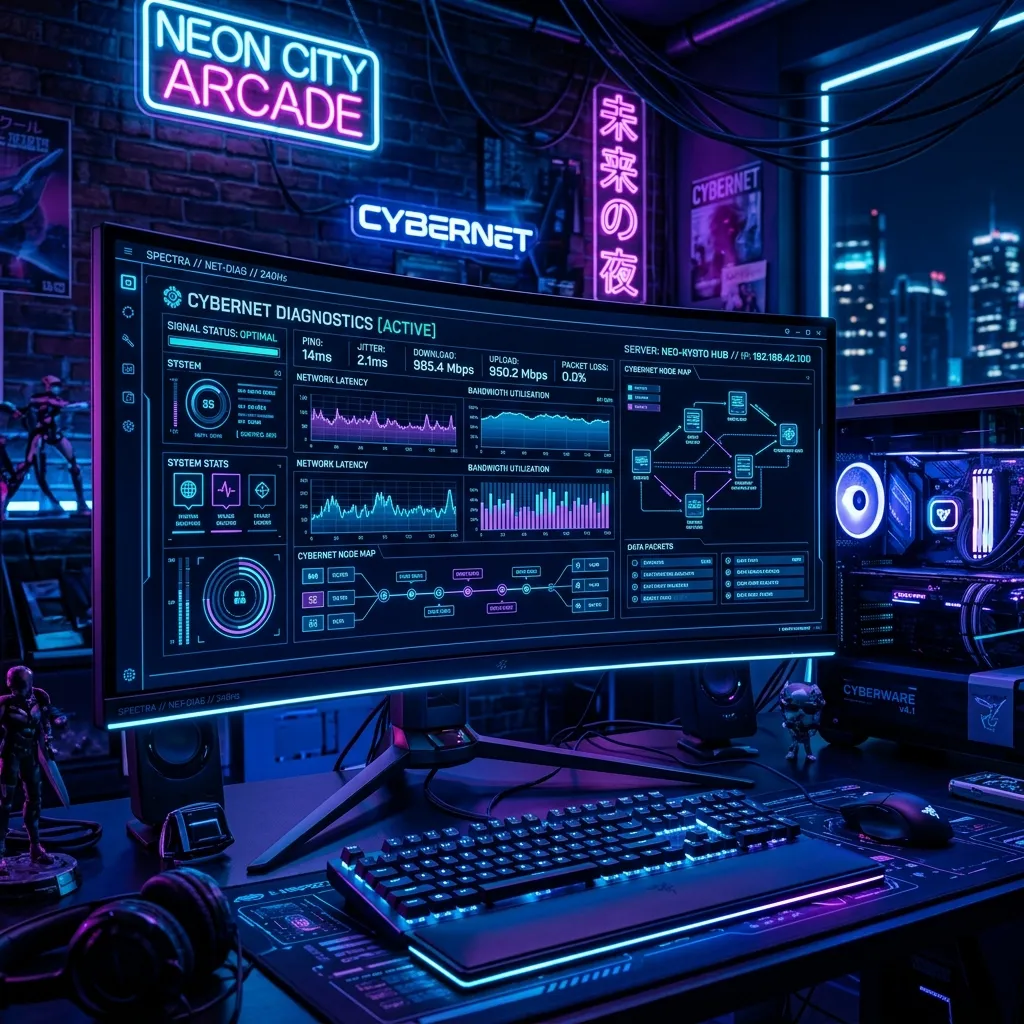
The Synchronization Dance
Gamers invest mostly in Monitors (144Hz, 240Hz, 360Hz) and GPUs. But your network latency creates a hard floor on responsiveness.
The Math
- 60Hz: New frame every 16.6ms.
- 144Hz: New frame every 6.9ms.
- 360Hz: New frame every 2.7ms.
If your internet ping is 50ms, your data is already “older” than 18 frames on a 360Hz monitor. You are seeing a super-smooth animation of outdated information.
Conclusion: Lowering your ping from 40ms to 20ms gives you a bigger competitive advantage than upgrading from 240Hz to 360Hz.
The Perceptual Threshold: Where Refresh Rate Stops Mattering
Research on human visual perception shows diminishing returns above 240Hz for most people in most scenarios. The jump from 60Hz to 144Hz is dramatic and universally noticeable. From 144Hz to 240Hz is meaningful for competitive play. Above 240Hz, the difference becomes subtler and most players can’t reliably distinguish it in blind tests. The key insight: if your network ping is 80ms, no refresh rate upgrade will make your game feel responsive — the bottleneck is your connection, not your display.
Frequently Asked Questions
Does a 144Hz monitor actually reduce ping?
No — your monitor refresh rate has zero effect on network latency. What it does reduce is display latency: the time between a frame being rendered by your GPU and your eyes seeing it. A 60Hz monitor takes up to 16.6ms to display a new frame; a 144Hz monitor takes up to 6.9ms. That’s a real improvement, but it’s entirely local and independent of your internet connection.
What matters more for competitive gaming: low ping or high refresh rate?
It depends on your current bottleneck. If you’re playing on a 60Hz monitor with 15ms ping, upgrading to 144Hz will feel more impactful. If you’re already at 144Hz with 80ms ping, reducing your ping will feel more impactful. The two improvements compound — elite competitive setups optimize both simultaneously because every millisecond of added latency from either source hurts performance.