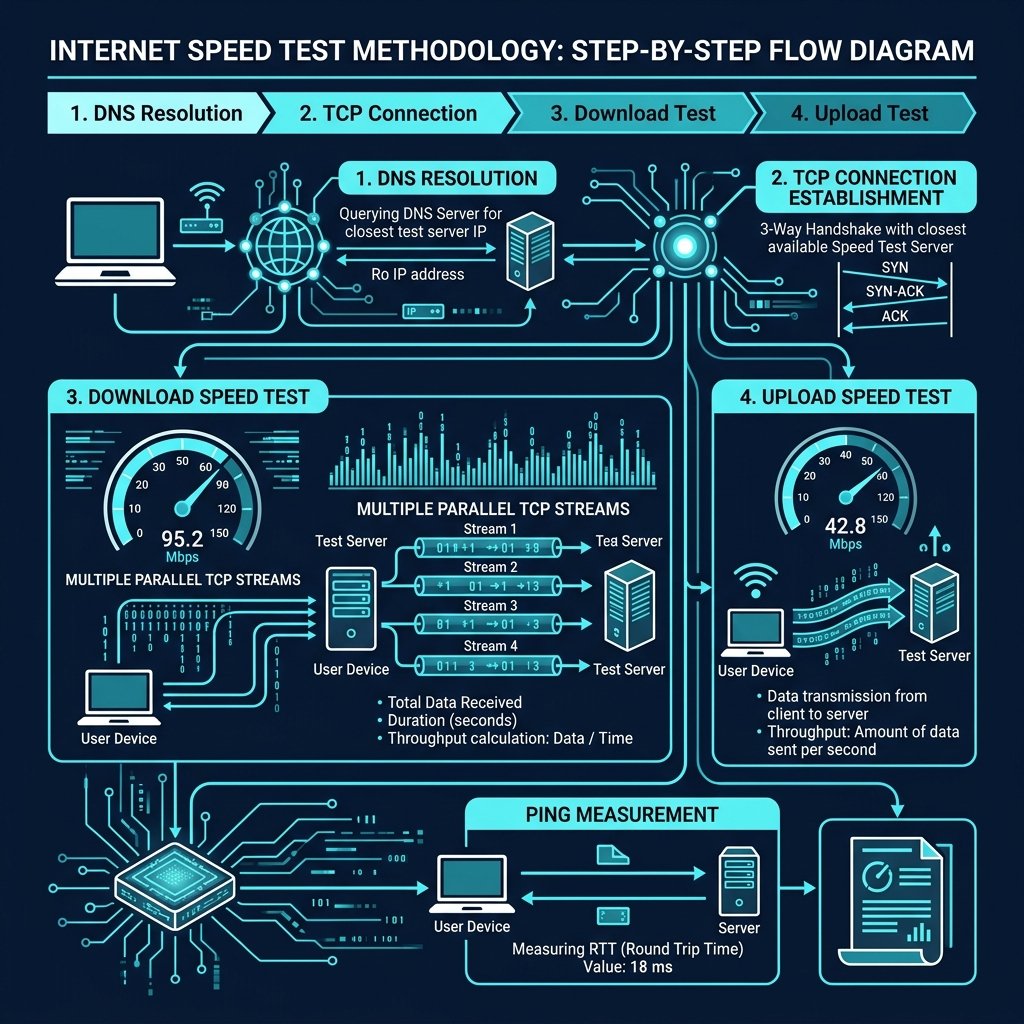
Decoding the Numbers
Running an internet speed test is easy, but understanding the results is where most people get lost. Speed isn’t just one number; it’s a trifecta of metrics.
1. Download Speed
This is how fast you pull data from the web. Essential for streaming Netflix in 4K or downloading games. Most households need at least 100 Mbps.
2. Upload Speed
Often ignored, but critical for Zoom calls and Twitch streaming. If your internet speed test shows less than 10 Mbps upload, you might sound robotic in meetings.
3. Ping (Latency)
The time it takes for a signal to travel to the server and back. Low ping (< 20ms) is vital for gaming.
How to Get Accurate Results Every Time
Most people run a speed test once, glance at the number, and move on. That single data point is almost meaningless. For a reliable reading, run your test three times at different hours — morning, peak evening (7-10 PM), and late night — and compare the results. A consistent number across all three means your ISP is delivering what you’re paying for. A number that drops 40%+ during peak hours is a clear sign of network congestion or ISP throttling.
Frequently Asked Questions
Should I use WiFi or Ethernet for a speed test?
Always use Ethernet for the most accurate result. WiFi adds variables — distance from the router, interference from neighboring networks, and the limitations of your device’s wireless adapter — that can make your connection look 20-50% slower than it actually is. An Ethernet test tells you what your line can actually deliver; a WiFi test tells you what your current wireless setup can deliver.
Why does my speed test result differ from my ISP’s advertised speed?
ISPs advertise “up to” speeds — meaning the theoretical maximum under ideal conditions. Real-world speeds depend on network congestion, the distance to the test server, your equipment quality, and how many other customers are sharing your local infrastructure at the same moment. Consistently getting 80%+ of your advertised speed is considered normal and acceptable under FCC guidelines.