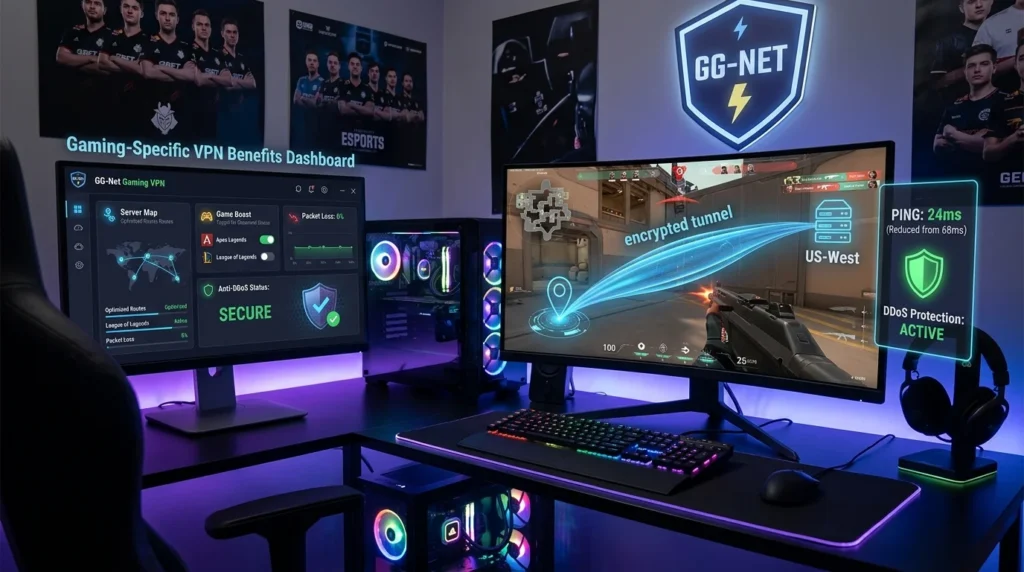
Privacy vs. Performance
Common wisdom says “VPNs add lag.” And generally, that’s true. You are adding an extra stop to your journey. So why do some pros use them?
1. DDoS Protection
If you are a streamer or high-profile player, leaking your IP means getting kicked offline by script kiddies. A VPN hides your true IP.
2. Example: Routing Correction
Sometimes, your ISP has a “broken” route to a game server (e.g., routing traffic from Texas to New York via California). A VPN can force a more direct path. This is rare but possible.
The Performance Cost
Expect a 5-10ms ping increase with a good WireGuard VPN. If you aren’t under attack, turn it off for competitive play.
Choosing One That Won’t Wreck Your Ping
Not all VPN protocols are created equal for gaming. WireGuard and its proprietary variants (like NordVPN’s NordLynx) add far less overhead than older OpenVPN connections — often the difference between a 3ms hit and a 25ms one. Our NordVPN speed test review measures exactly how much latency modern VPN protocols add under real gaming conditions, and which server locations minimize it.
When a VPN Is Actually the Right Call
Beyond DDoS protection, a VPN earns its keep when your ISP is actively throttling gaming traffic during peak hours — encrypting your connection prevents your provider from identifying and deprioritizing it. If your speed tests show a sharp drop specifically during gaming sessions (but not during general browsing), that’s the clearest signal a VPN might help rather than hurt.
Frequently Asked Questions
Will a VPN improve my ping in online games?
Usually not — and it can make it worse, since you’re adding an extra routing hop. The exception is when your ISP’s default route to a game server is inefficient (rare) or when your ISP throttles gaming traffic specifically (more common); in both cases a good VPN can occasionally produce a lower, more stable ping than your default connection.
Which VPN protocol is best for gaming?
WireGuard-based protocols (including NordLynx and similar proprietary implementations) consistently add the least latency — typically 2-8ms versus 15-30ms for older OpenVPN connections. If your VPN provider lets you choose a protocol, WireGuard is almost always the right choice for real-time applications like gaming.