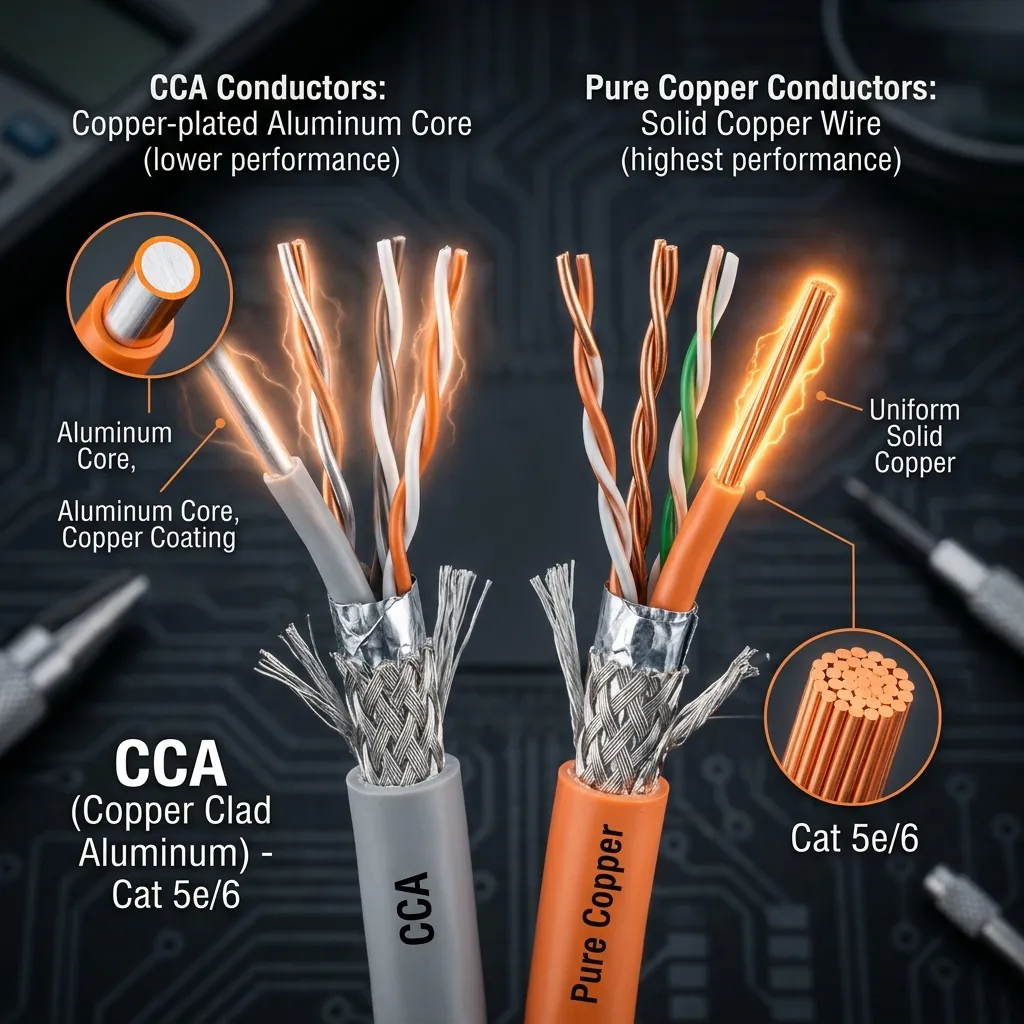
Not All Copper is Copper
You find a 100ft Cat6 cable for $10. A steal? No, it’s a trap.
What is CCA?
Copper Clad Aluminum cables have an aluminum core with a tiny coating of copper. Aluminum is a poor conductor compared to copper. It has higher resistance, gets hotter, and is brittle.
Why it’s Dangerous
If you use PoE (Power over Ethernet) to power a camera or access point, CCA cables can overheat and literally melt or catch fire due to the resistance. They also fail over long distances, causing packet loss.
How to Spot a Fake
Look for the “UL Listed” mark. Scratch the wire conductor with a knife. If you see silver underneath, it’s aluminum garbage. If it’s copper all the way through, you’re safe.
How to Identify CCA Cable Before You Buy
CCA cable is rarely labeled as such — manufacturers use vague descriptions like “high-speed ethernet” or simply omit the conductor material entirely. The most reliable check is a magnet: copper is non-magnetic, aluminum is not, so a magnet won’t stick to either. However, CCA cable often has a very thin copper coating that passes visual inspection. The definitive test is weight — a 100-foot run of genuine Cat6 copper weighs roughly 60% more than the CCA equivalent. If an “ethernet cable” seems unusually light, treat it as a red flag. For permanent home network installations, only buy cable from established brands that explicitly state “pure copper conductors.”
Frequently Asked Questions
Will CCA ethernet cable actually slow down my internet?
Yes, especially over longer runs. CCA’s higher electrical resistance causes signal attenuation — at 100 feet, a CCA cable may struggle to maintain reliable gigabit speeds where pure copper would have no issues. You’ll typically see more packet retransmissions, higher error rates, and inconsistent throughput, particularly under heavy load. Short runs (under 15 feet) may perform acceptably, but for anything in your walls or ceiling, the performance and safety risk isn’t worth the small cost saving.
Is CCA ethernet cable a fire hazard?
It carries a higher risk than pure copper. CCA’s higher resistance generates more heat under sustained load, and the galvanic corrosion at the copper-aluminum junction can increase resistance further over time. In a home network passing gigabit speeds through walls and ceilings, this matters. Most jurisdictions’ electrical codes implicitly require pure copper for in-wall wiring; CCA in those installations technically violates code and may void your home insurance for fire-related claims.