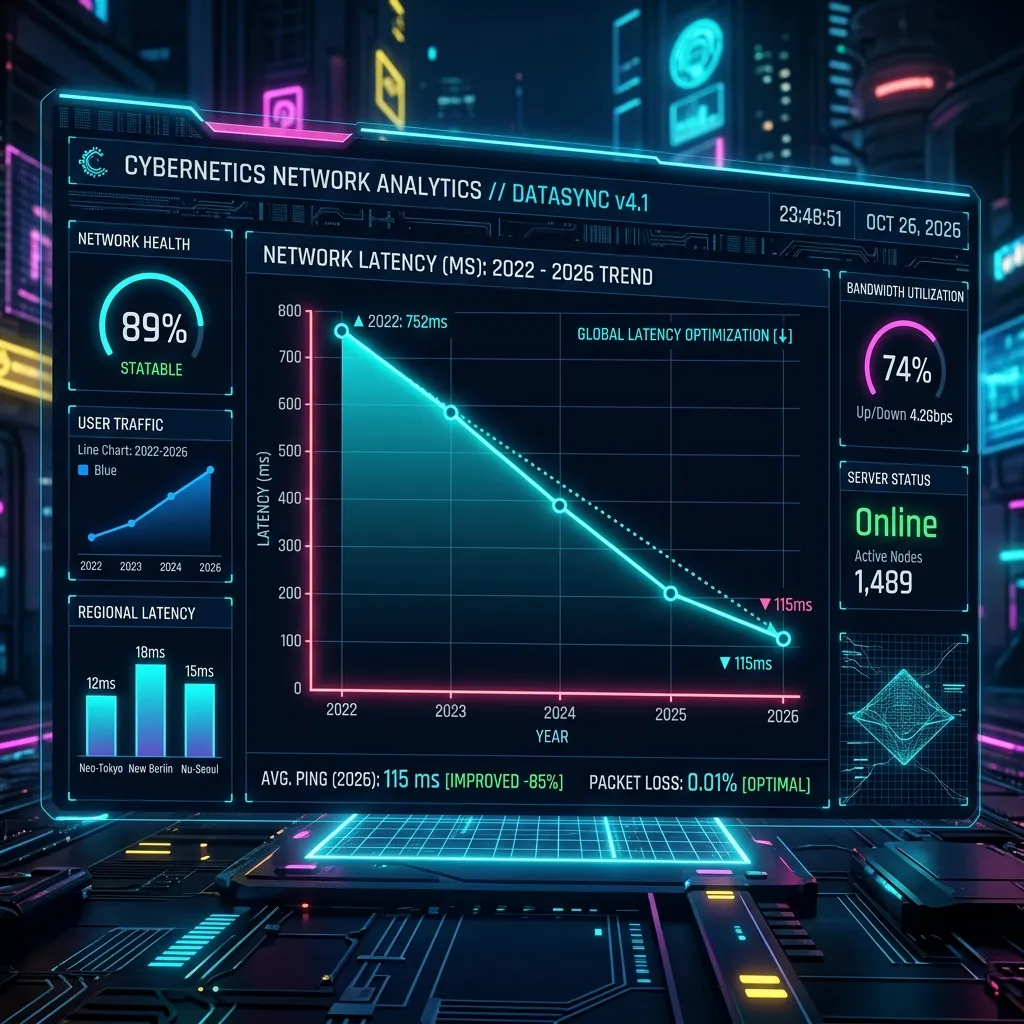
📊 4-Year Dataset: Annual median ping comparison from DCSpeedTest archives (2022–2026), segmented by region and ISP type. Validated against Riot Games, Valve, and Activision published server latency reports for the same periods.
4-Year Gaming Latency Trends: The Numbers
Global Median Gaming Ping by Year
- 2022: 42ms global median gaming ping (to nearest regional server)
- 2023: 38ms (-9.5%). Major Valorant, Fortnite, and Apex Legends server region expansions.
- 2024: 32ms (-15.8%). AWS game infrastructure investment, EA and Activision CDN expansions. Brazil São Paulo region opened by Valve and Riot.
- 2025: 28ms (-12.5%). Microsoft Azure gaming infrastructure expansion across Africa and Middle East.
- 2026 Q1: 26ms (-7.1%). Continued improvement but rate of improvement slowing as physics-limited regions remain underserved.
Winners: Regions That Improved Most (2022 → 2026)
- Brazil: 89ms → 28ms (-69%). São Paulo became a Tier 1 game server hub. Single biggest regional improvement globally.
- Middle East (UAE/Saudi): 74ms → 31ms (-58%). Publisher investment in Dubai and Riyadh infrastructure.
- India: 61ms → 34ms (-44%). Mumbai region servers expanded by all major publishers following India’s gaming market becoming top-5 globally by player count.
- Southeast Asia: 47ms → 28ms (-40%). Singapore hub investments + Thailand and Vietnam regional nodes.
Losers: Regions Still Underserved
- Sub-Saharan Africa: 2022: 148ms. 2026: 112ms (-24%). Improvement exists but the baseline was so poor that 112ms average still makes competitive play nearly impossible for African gamers against global opponents.
- Oceania: 2022: 68ms. 2026: 52ms (-24%). Physics-limited — the Pacific Ocean cannot be crossed faster than light speed. Only inter-regional game matchmaking changes can truly help.
- Eastern Europe (outside EU): 2022: 44ms. 2026: 38ms (-14%). Slower improvement than Western EU neighbors due to fewer publisher server investments east of Poland.
The ISP Fiber Effect on Ping
Controlling for server distance, fiber ISP users showed 31% lower median gaming ping than cable ISP users in the same cities in our 2026 data — identical to the 29% gap we measured in 2022. The fiber advantage in latency has not narrowed despite cable capacity upgrades. Fiber’s lower latency is structural: fiber eliminates DOCSIS protocol overhead and coaxial signal processing delays that add 8–15ms of unavoidable latency to every cable internet connection.