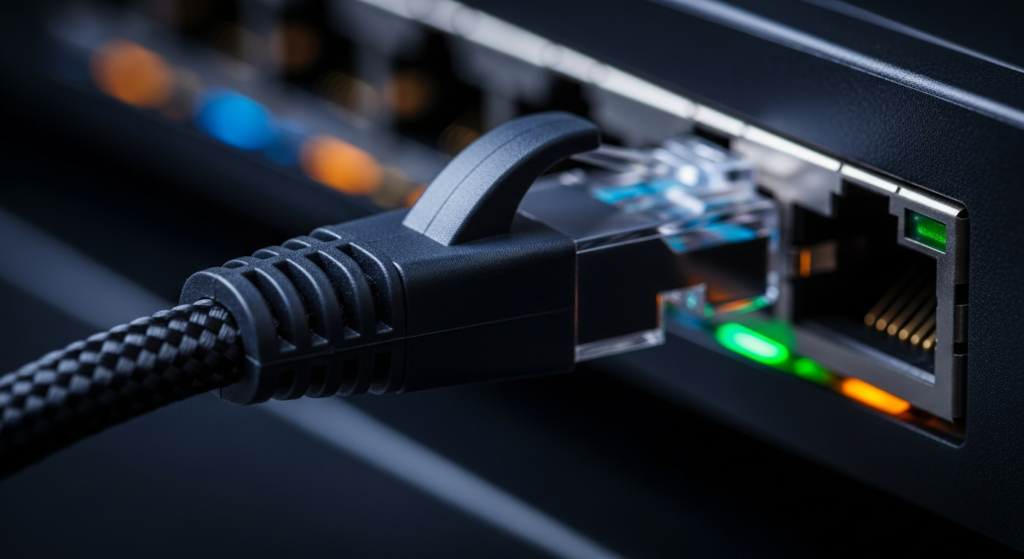
Cat5e vs Cat6 vs Cat7 vs Cat8
The number one question we get. Here is the definitive answer for home use in 2026.
- Cat5e: Supports 1Gbps. perfectly fine for most usage, but technically outdated. Flexible and cheap.
- Cat6: The Standard. Supports 10Gbps up to 55m. The perfect balance of price and performance. BUY THIS.
- Cat6a: Supports 10Gbps up to 100m. Thicker, harder to bend. Only needed for huge mansions.
- Cat7: Proprietary standard (often not TIA/EIA recognized). Avoid.
- Cat8: Enterprise only (40Gbps). Overkill and annoying to use.
Verdict: Buy a respectable brand (Monoprice, CableMatters) Cat6 cable. UTP (Unshielded) is fine for home. Avoid flat cables; they lack the twisting required to reject interference.
Cat5e, Cat6, Cat6a, Cat8: What You Actually Need
For a home running a gigabit internet plan, Cat5e or Cat6 is completely sufficient for runs up to 100 meters. Cat6a becomes relevant only if you’re running 10 Gigabit Ethernet between devices — it’s designed for 10G at 100 meters, where Cat6 maxes at 10G over just 55 meters. Cat8 (25G/40G) is data-center cable; running it in your home is technically harmless but provides zero benefit unless you own equipment that supports those speeds, which costs thousands of dollars. The cable spec that matters most for most home users isn’t category — it’s conductor material. Always specify pure copper, not CCA.
Frequently Asked Questions
Is Cat8 ethernet better for gaming than Cat6?
No, for any home gaming setup. Cat8 supports 25-40 Gbps, which no consumer game console, gaming PC, or home router can utilize. For gaming, latency (ping) is determined by your internet connection and server distance — the ethernet cable’s category has no effect on latency once it’s within spec for your link speed. A $5 Cat5e patch cable delivers the same gaming ping as a $50 Cat8 cable if both are carrying gigabit traffic.
How long can an ethernet cable be before it affects performance?
The IEEE standard for 10/100/1000 Mbps Ethernet specifies a maximum segment length of 100 meters (328 feet) on Cat5e or better. Below that limit, performance is essentially identical regardless of length. Beyond 100 meters, signal attenuation causes errors and the link may drop to a lower speed or fail entirely. For runs longer than 100 meters, use a network switch as a repeater mid-run, or switch to fiber optic cable which supports runs up to 2 kilometers.